Anatomy, physiology, bird life history, and veterinary behavior sources reviewed July 28, 2026 · Original editorial illustrations are labeled
Penguin knees: yes. Pigeon milking: not in the dairy sense. Missing baby pigeons: hidden until they look nearly grown. Your cat's alleged plot: almost certainly play or another explainable behavior, but real aggression matters. Fish thirst: they regulate water, though a human-like feeling of thirst is unknown.
Do penguins have knees?
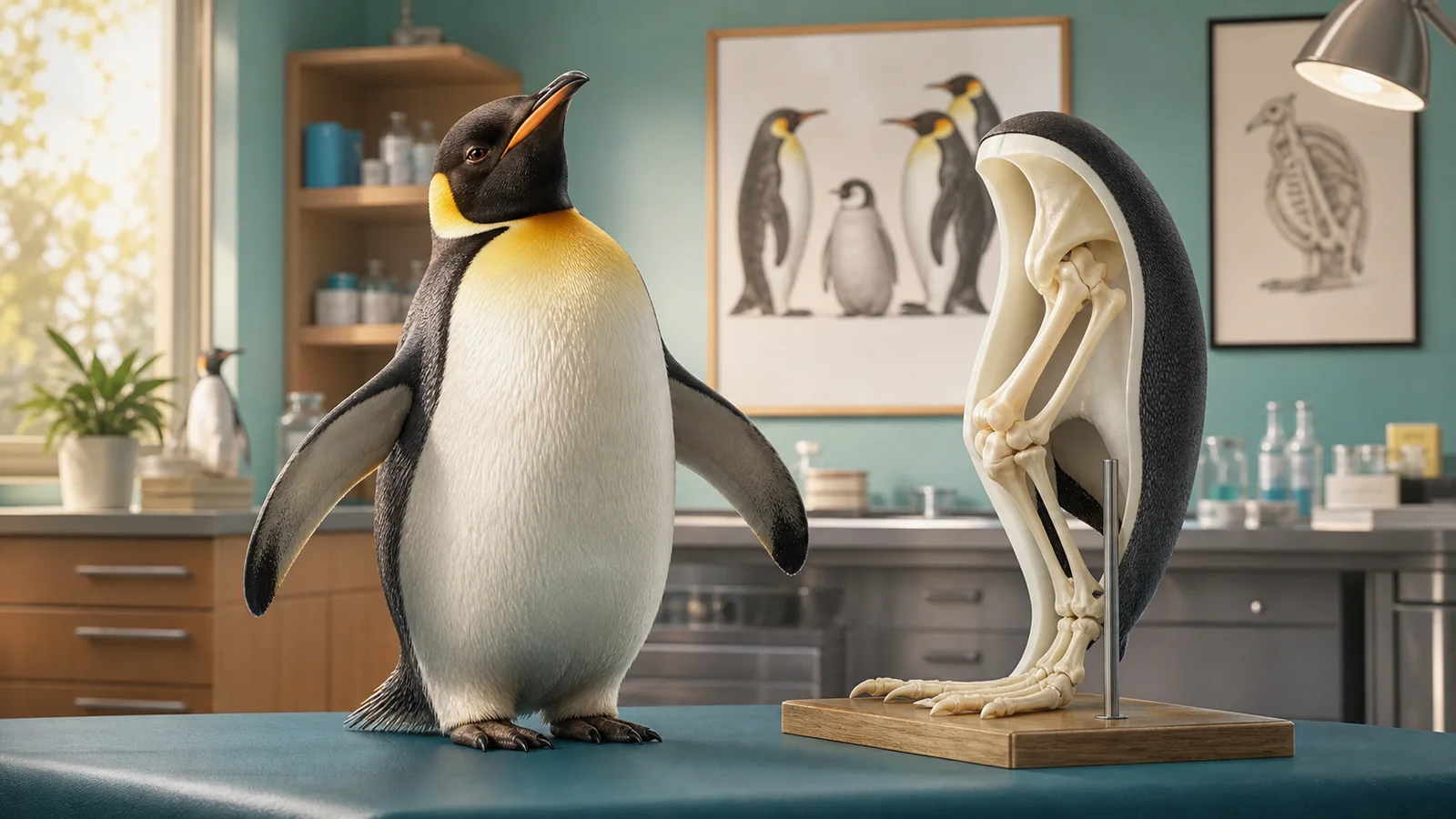
Yes. Penguins have a femur, a knee joint, lower leg bones, an ankle, and feet. The confusion is mostly architectural: the femur and true knee sit high inside the body outline, hidden beneath dense feathers. The obvious joint low on the leg—the one that can look as if it bends backward—is the ankle, not the knee.
That tucked-up arrangement helps give penguins their famous upright silhouette. It also means a casual viewer sees feet, a short exposed lower leg, and then an uninterrupted formal jacket. The knee is present; it simply has excellent camouflage and no interest in publicity.
The hero is a comic editorial illustration, not a labeled anatomical diagram. For actual bone placement, use the anatomy source below rather than asking the illustrated penguin to sit for radiology boards.
Can you milk a pigeon?
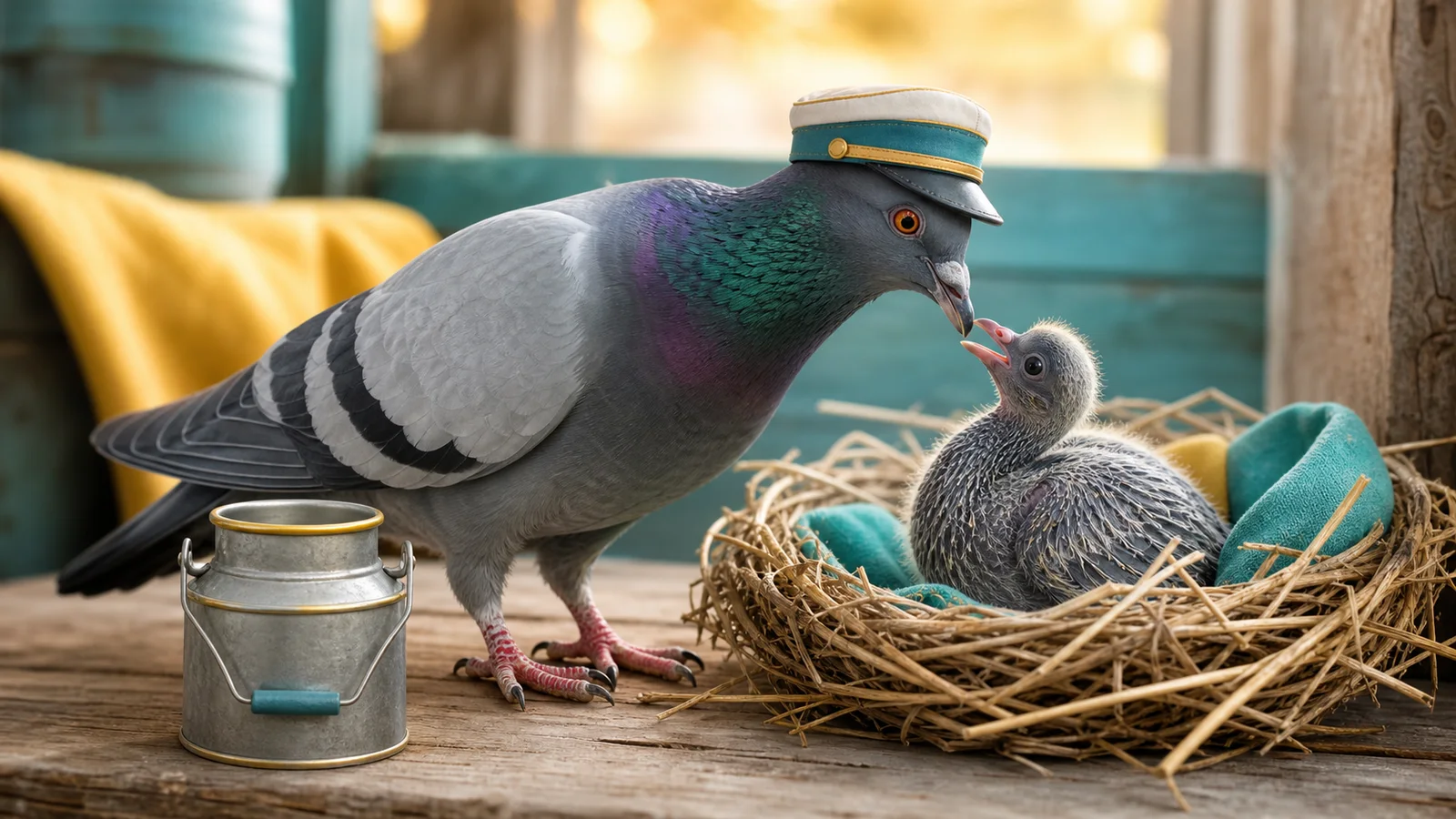
No—not like a cow, goat, or any mammal, and nobody should try to squeeze or extract material from a bird. Pigeons do make something scientists call crop milk, but the name describes its job, not a dairy product.
Both male and female pigeons can produce it. Cells lining the crop—a food-storage pouch connected to the esophagus—multiply, accumulate fat and protein, and form a curd-like material. The parent regurgitates that material to newly hatched squabs. There are no mammary glands, no teats, and absolutely no tiny three-legged milking stool.
Crop milk is a remarkable example of unrelated animals evolving different ways to deliver concentrated nutrition to young. Flamingos and male emperor penguins also produce nutritive crop or esophageal secretions, though by their own species-specific processes. “Milk” here is a functional analogy, not permission to start Pigeon Dairy LLC.
Why do we never see baby pigeons?

We do see them occasionally. City Rock Pigeons usually build nests on sheltered ledges, overhangs, beams, gutters, stairwells, and building cavities—modern substitutes for their ancestral cliff sites. Those nests tend to sit above or away from normal human sightlines.
Cornell lists a nestling period of about 25 to 32 days. Hatchlings begin helpless and sparsely covered, but they stay in the nest while growing quickly. By the time a juvenile enters the sidewalk workforce, it is nearly adult-sized and fully feathered enough to pass as “some pigeon.”
Look closely and a recent fledgling may have a duller eye, a smaller or less prominent cere above the bill, softer-looking plumage, and a few yellowish down feathers still poking through. The tidy answer is: they are hidden while they look obviously baby-like and visible after most of the baby disguise has expired.
Is my cat trying to kill me?
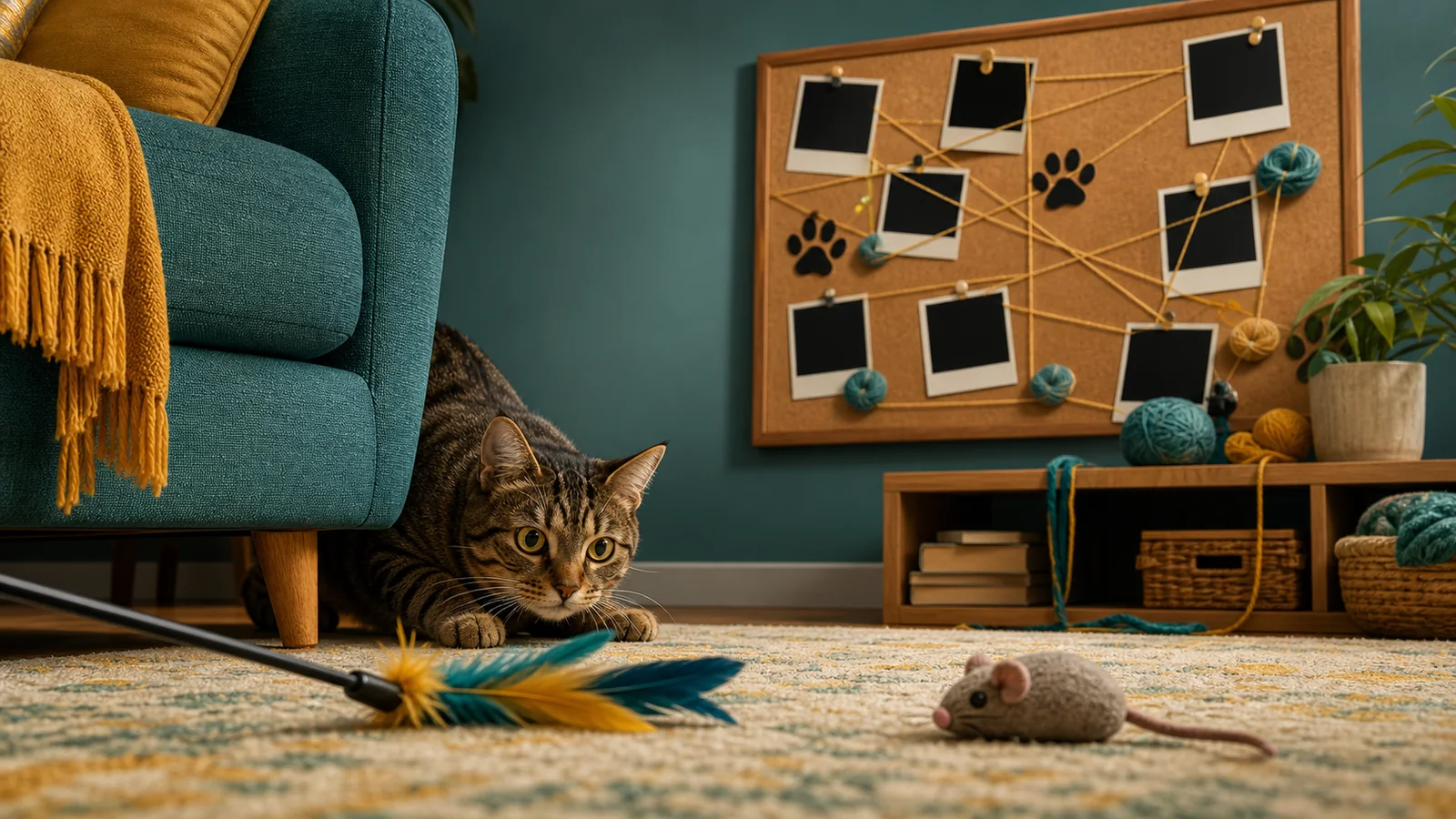
Stalking, ambushing, pouncing, chasing, grabbing, and biting are not evidence that your cat has drafted a will with your name crossed out. Those actions can be parts of normal predatory play, especially when a cat is young, highly aroused, bored, or accustomed to treating human hands and feet as toys.
Context matters. A loose, bouncy cat who takes turns, pauses, redirects to a wand toy, and uses inhibited claws or bites is different from a tense cat who cannot disengage. Fear, redirected arousal, petting-induced aggression, territorial conflict, pain, and medical problems can also produce serious behavior. One tail flick or large pupil does not diagnose intent; look at the whole body, the trigger, intensity, injuries, predictability, and change from that cat's baseline.
What helps with over-enthusiastic play
- Use fishing-rod or wand toys that keep teeth and claws away from skin.
- Offer short, predictable play sessions and let the cat catch the toy at the end.
- Stop using hands, ankles, or feet as prey—even when the kitten version is adorable.
- End rough play calmly. Do not hit, yell, spray, or corner the cat; punishment can increase fear and arousal.
- Give the cat climbing, hiding, scratching, and food-foraging options so the sofa ambush is not the day's only enrichment.
Contact a veterinarian about sudden or escalating aggression, apparent pain or illness, hard or repeated bites, injuries, attacks that seem unpredictable, or behavior the household cannot manage safely. Cat bites can cause serious infection; wash wounds promptly and seek human medical advice for a bite that breaks skin, especially on a hand, joint, or face.
Do fish get thirsty?
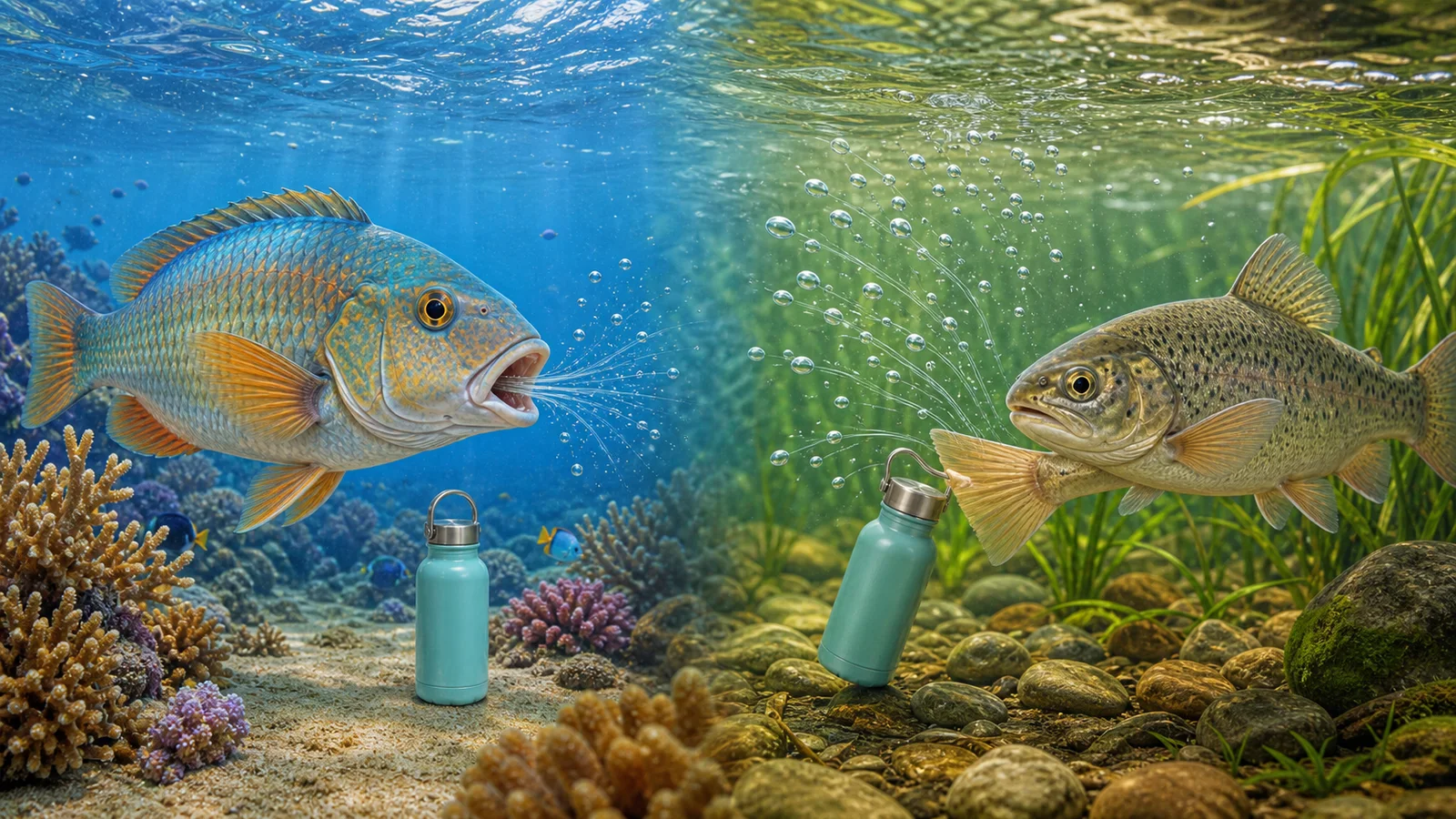
Fish regulate hydration, but whether that produces the same subjective feeling humans call thirst is unknown. Scientists can measure drinking, water movement, salts, hormones, and urine. They cannot simply ask a trout to rate its thirst from one to ten.
| Fish and water | Water-balance problem | Typical response |
|---|---|---|
| Freshwater bony fish | Body fluids are saltier than the surrounding water, so water tends to move inward | Generally drink little, produce plentiful dilute urine, and actively replace lost ions |
| Marine bony fish | Seawater is more concentrated, so water tends to move out | Swallow seawater, absorb water in the intestine, remove excess salts mainly across the gills, and conserve water |
| Marine sharks and rays | Retained urea and other osmolytes keep body fluids closer to seawater concentration | Use a different strategy and do not share the same constant drinking requirement as marine bony fish |
Those are broad patterns, not universal rules. Some freshwater fish drink measurable amounts, salinity-changing species switch strategies, and sharks can drink under certain conditions. Also, water passing into a fish's mouth and over its gills for breathing is not automatically the same as swallowing water for hydration.
So, do fish get thirsty? They have serious water-balance work to do. Whether a marine fish experiences that work as “I could really use a beverage” remains beyond the available evidence—and the nearest beverage is inconveniently the entire ocean.
Frequently asked questions
Do penguins really have knees?
Yes. The knee sits high beneath the body outline and feathers. The visible lower joint that seems to bend backward is the ankle.
Do male pigeons make crop milk too?
Yes. Both male and female pigeons can produce crop milk and feed it to their squabs.
Why do we rarely see pigeon chicks in cities?
They grow for roughly 25 to 32 days in sheltered nests and emerge nearly adult-sized, so they are hidden during the obvious baby stage and easy to overlook afterward.
When does cat aggression need a veterinarian?
Seek advice when aggression is sudden, escalating, painful, injurious, unpredictable, or difficult to manage safely. A veterinarian can look for pain or illness before a qualified behavior plan is developed.
Do freshwater fish and saltwater fish drink differently?
Generally, yes. Freshwater bony fish gain water across body surfaces and drink little; marine bony fish lose water and swallow seawater. Species and environments create exceptions.
Sources and further reading
These sources support the anatomy, physiology, life-history, and behavior claims above. The jokes remain entirely our responsibility.
- Penguins International: Do penguins have knees?
- BMC Genomics: Gene expression and the production of pigeon crop milk
- PLOS ONE: Pigeon crop milk and the developing squab
- Cornell Lab of Ornithology: Rock Pigeon life history
- Audubon BirdNote: Why baby pigeons are rarely seen
- Cornell Feline Health Center: Feline aggression
- Merck Veterinary Manual: Behavior problems of cats
- The Biological Bulletin: Drinking and water balance in vertebrates