First choose a nutritionally complete food appropriate for the dog's life stage and health. Second, feed an amount that maintains healthy body condition and muscle. Third, keep treats and extras modest. Fourth, investigate recurring digestive or skin signs with a veterinarian. Supplements come after those basics, not in place of them.
The digestive tract turns food into usable nutrients, supports the intestinal barrier, interacts with the immune system, and hosts a complex microbial community. "Gut health" is real biology, but it is also a phrase printed on many jars. The best way to protect it starts with unglamorous consistency.
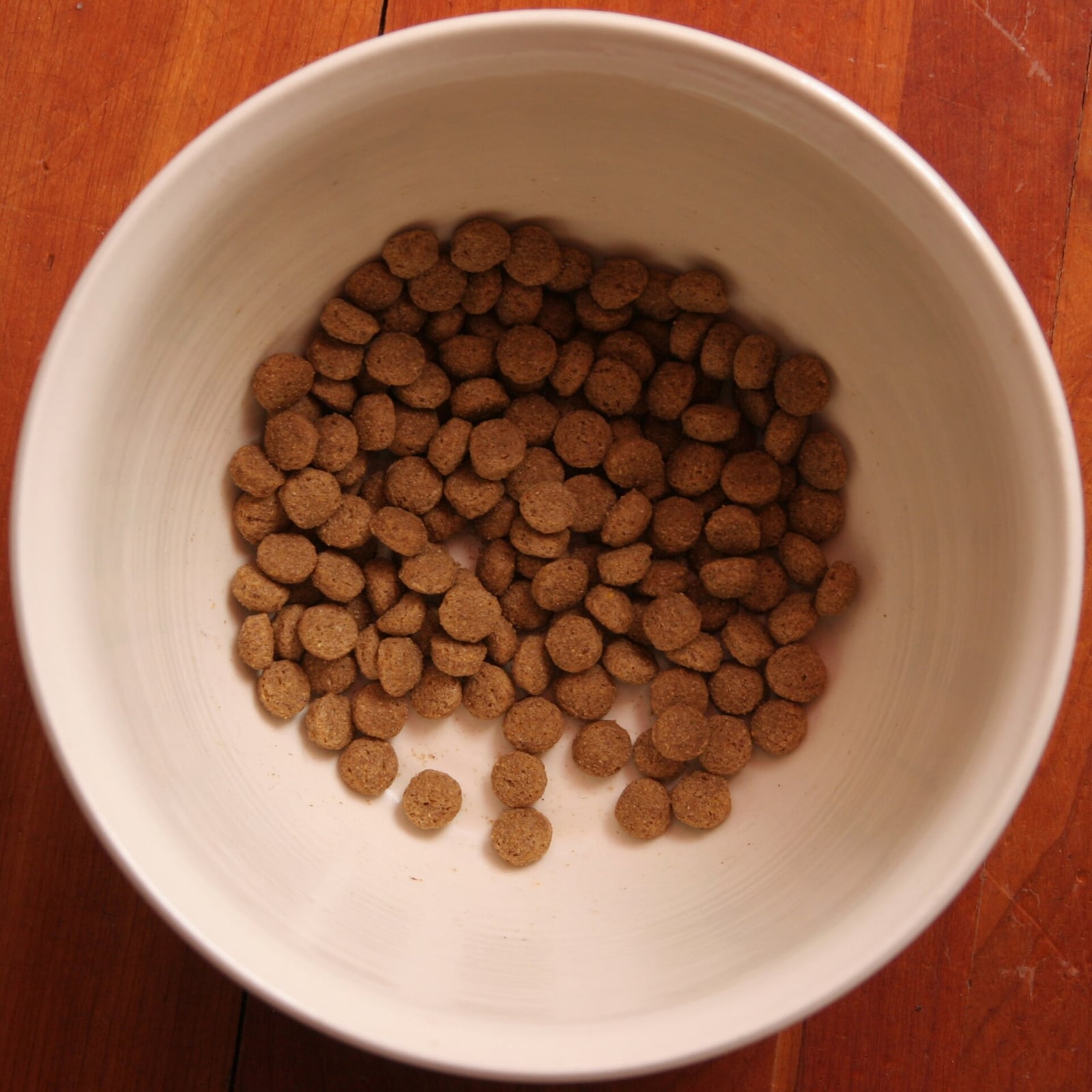
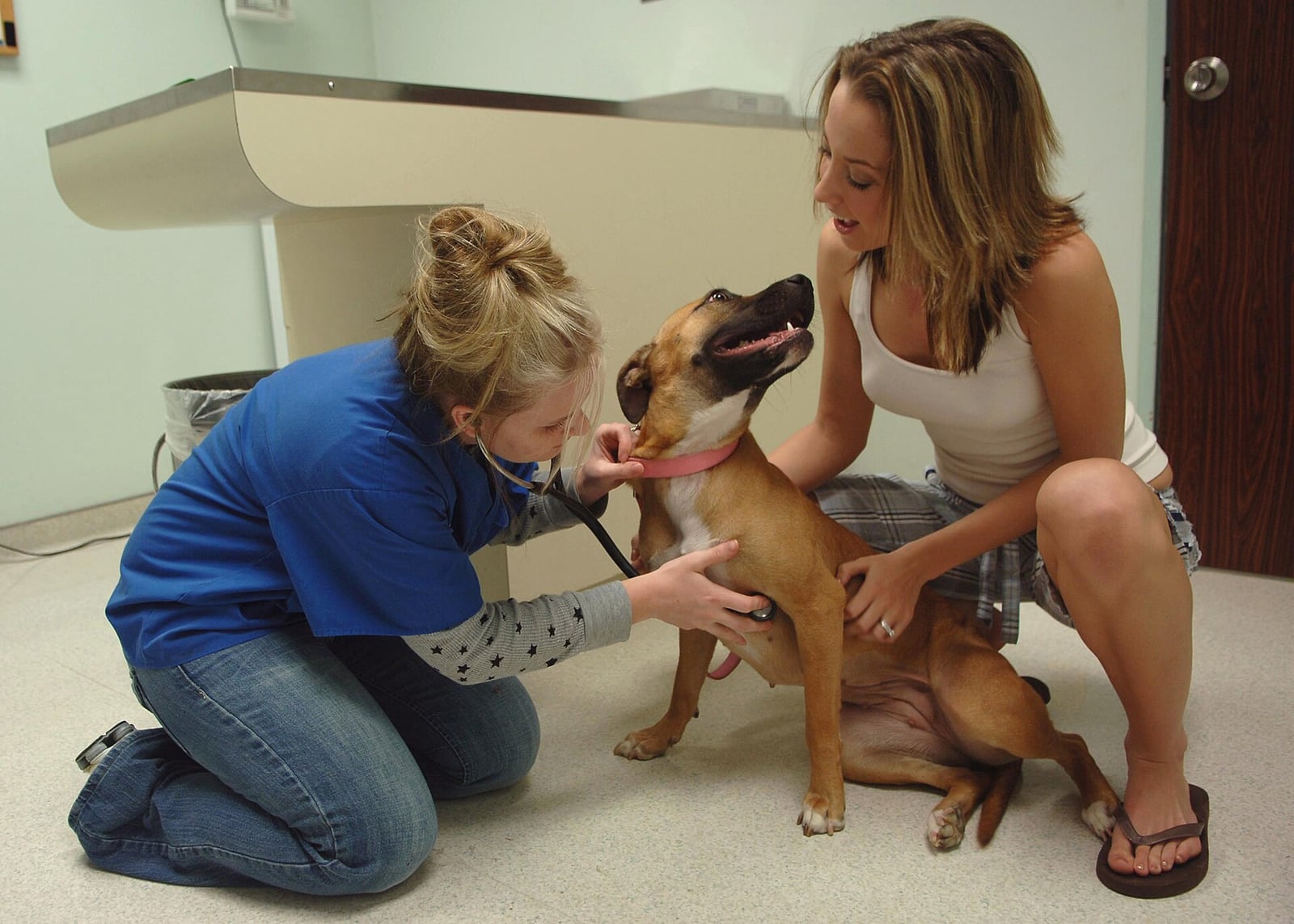
How to read a dog-food label usefully
Look for nutritional adequacy
In the United States, find the statement identifying the life stage or purpose for which the food is complete and balanced, and whether that conclusion comes from feeding tests or formulation. A puppy, reproducing dog, healthy adult, and dog with disease may need different nutrition.
Do not grade food by the ingredient list alone
Ingredients are listed by weight before processing, which can make water-rich ingredients appear more prominent. A familiar-sounding ingredient is not automatically nutritionally superior, and a frightening chemical-sounding name may simply be a vitamin. WSAVA recommends evaluating the manufacturer's nutrition expertise, quality control, research, and ability to provide complete nutrient information.
Check calories, not just cup size
Foods can differ substantially in calories per cup or can. Use the calorie statement and a veterinary calorie target. A measuring cup filled with optimism is still not precise; a kitchen gram scale is often more consistent.
Treat marketing claims as questions
Words such as natural, premium, ancestral, human-grade, holistic, and gut-friendly do not by themselves prove that a diet is appropriate. Ask what evidence supports a claim and whether it matters for this dog.
Feed the dog in front of you
- Check body condition monthly. You should generally be able to feel ribs with a thin fat covering and see a waist from above, though ideal appearance varies.
- Watch muscle separately. A dog can carry excess fat while losing muscle, especially with age or illness.
- Use the bag as a starting point. Feeding guides cannot know your dog's activity, neuter status, metabolism, treats, or disease.
- Count every extra. Dental chews, training treats, table food, stuffed toys, and medication snacks all contribute calories.
- Recheck after life changes. Growth, neutering, injury, winter inactivity, aging, and new medication can change needs.
Measure all food and treats, record weight and body condition, and keep activity reasonably consistent. Adjust with veterinary guidance. Randomly reducing food because the dog "looks chunky from one angle" is less useful than a trend.
Everyday habits that support digestive health
- Change diets gradually. Unless a veterinarian directs otherwise, mix increasing amounts of new food over about a week or longer for sensitive dogs.
- Keep food fresh and dry. Store it in the original bag inside a clean sealed container so lot and expiration information remain available. Wash bowls and scoops.
- Prevent scavenging. Secure trash, compost, medications, cannabis, xylitol products, fatty leftovers, bones, corn cobs, socks, and children's snacks.
- Maintain parasite prevention and stool testing. "Sensitive stomach" and intestinal parasites can look inconveniently similar.
- Provide clean water. A sudden major change in thirst is health information.
- Use stress reduction and activity. Predictable routines and appropriate exercise can support normal elimination, but they do not replace medical care.
- Keep a symptom log. Record food, treats, stool quality, vomiting, itch, medication, and unusual exposures.
One soft stool after a dietary indiscretion is different from repeated watery diarrhea, blood, weight loss, or a puppy becoming lethargic. The pattern determines urgency.
What probiotics can and cannot do
Probiotics are live microorganisms intended to provide a benefit when delivered in an adequate amount. Effects are strain-specific and condition-specific: evidence for one strain, dose, and problem cannot automatically be transferred to every multi-strain chew. Shelf stability, viable count through expiration, storage, and whether a study used the exact finished product all matter.
Some veterinarians use particular probiotics for specific digestive situations, including around diet change or some antibiotic-associated problems. They are not a universal cure for diarrhea, itching, head shaking, yeast, or "immunity." Persistent symptoms need a diagnosis. AAHA's antimicrobial-stewardship guidance also emphasizes that supportive products should not delay appropriate evaluation and treatment.
Where a probiotic chew may fit
A chew can be convenient for an owner and palatable for a dog, but it remains an optional supplement around the edges of a complete diet. For the product below, the useful questions are: Does the veterinarian think a probiotic is appropriate? Are the named strains and amount suitable for the goal? Can the dog tolerate the ingredients and calories? Will it be stored and given exactly as labeled?
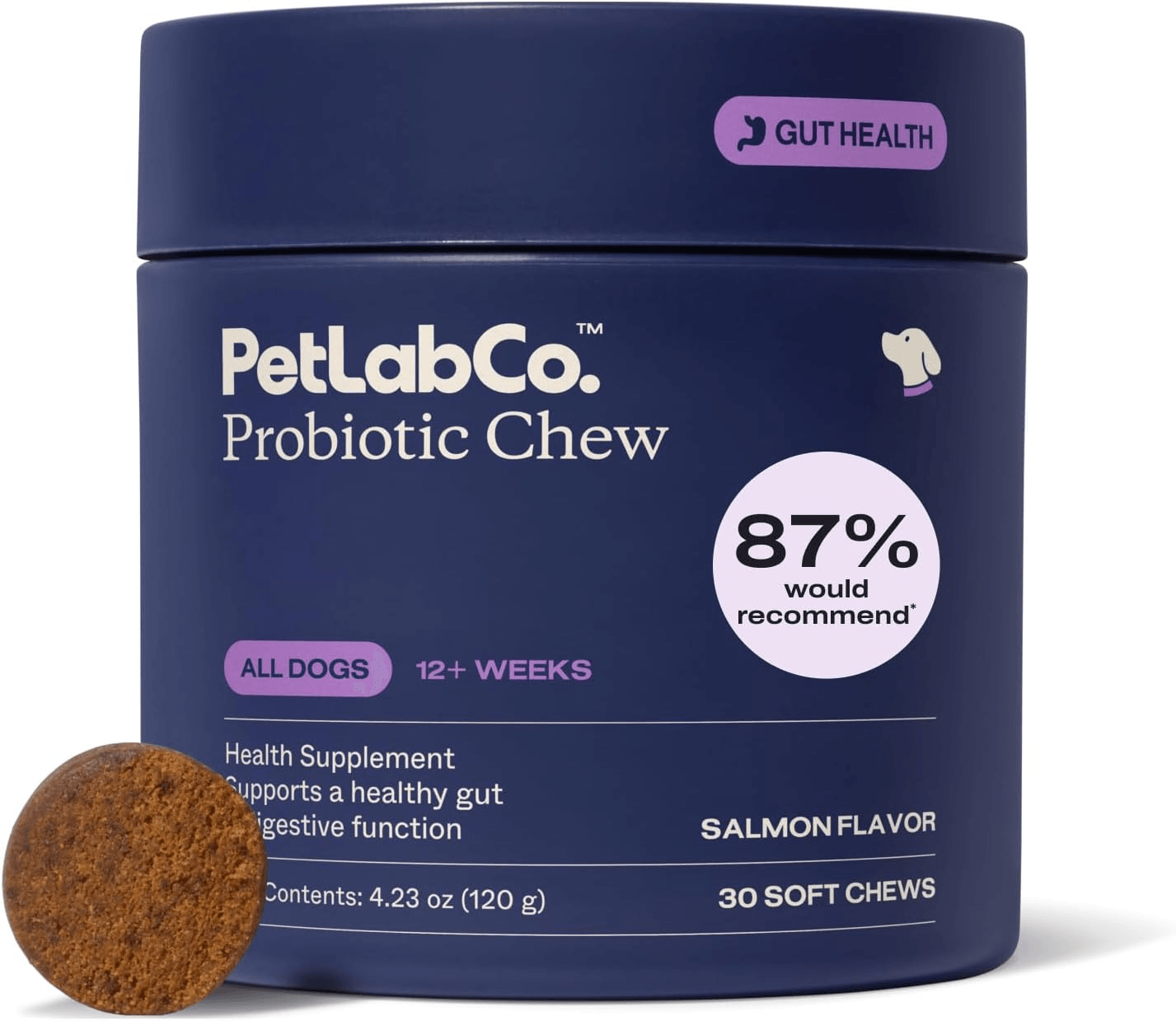
PetLab Co. Probiotic Chews for Dogs, 30 Soft Chews, Salmon
The label describes an eight-strain probiotic blend with prebiotic ingredients in a salmon-flavored soft chew for dogs 12 weeks and older. It is positioned for digestive support; it should not be used to self-diagnose recurring diarrhea, skin disease, or allergy.
Best for: Owners whose veterinarian agrees that a daily chew is reasonable and who prefer a soft-chew format.
Watch for: Check the full ingredient panel, dog age, serving directions, calories, storage, lot/expiration, and signs of intolerance. Manufacturer survey and marketing claims are not a guarantee for an individual dog.
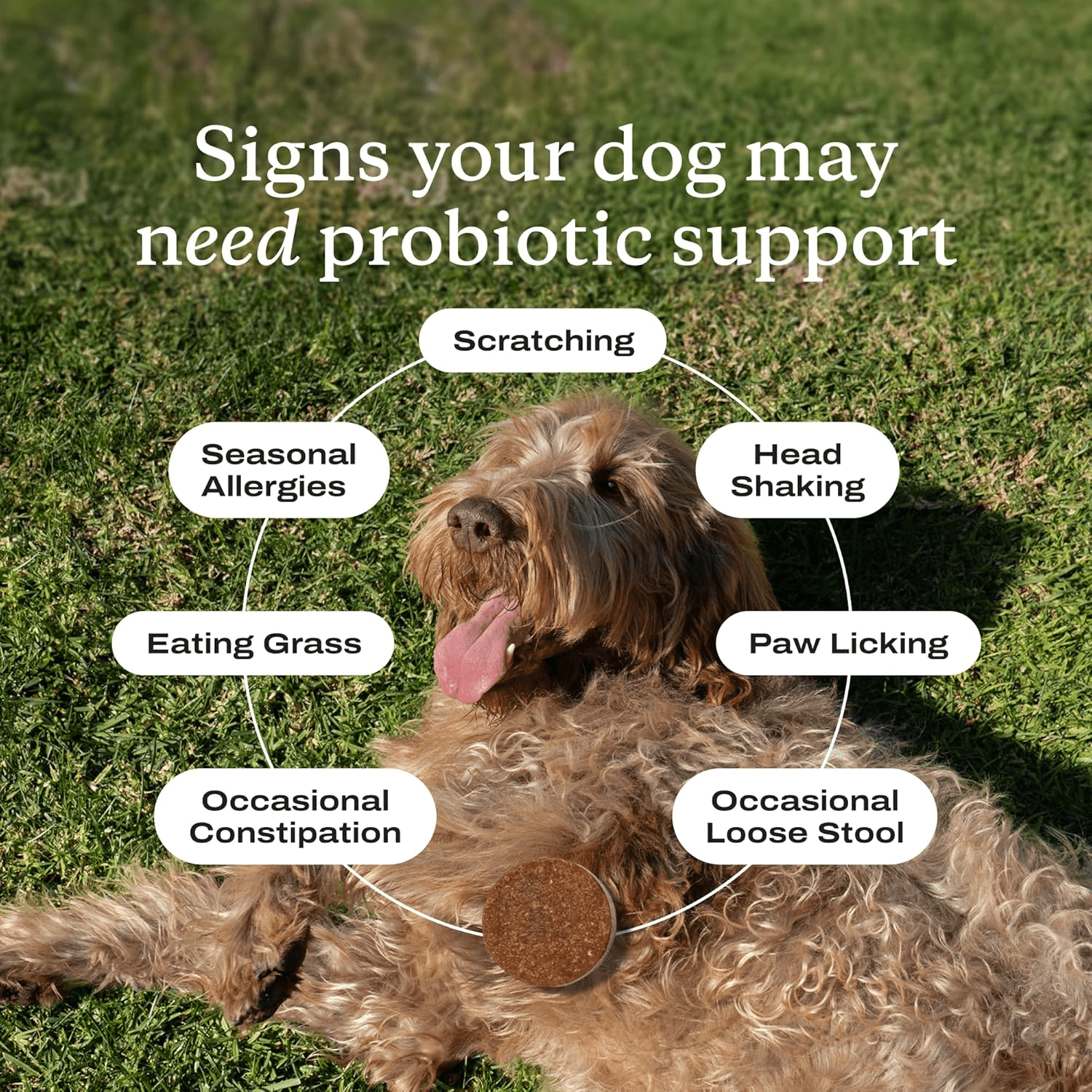
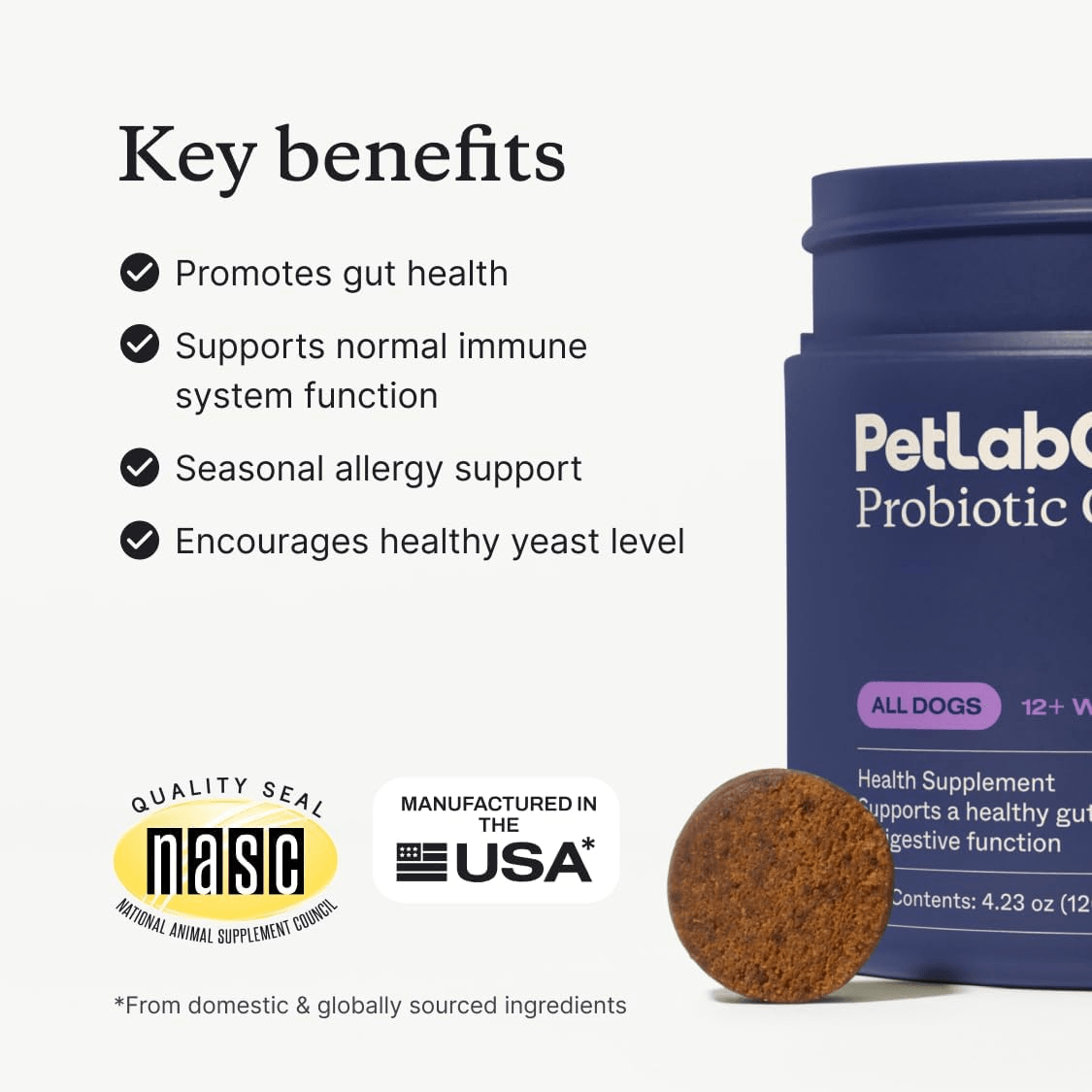
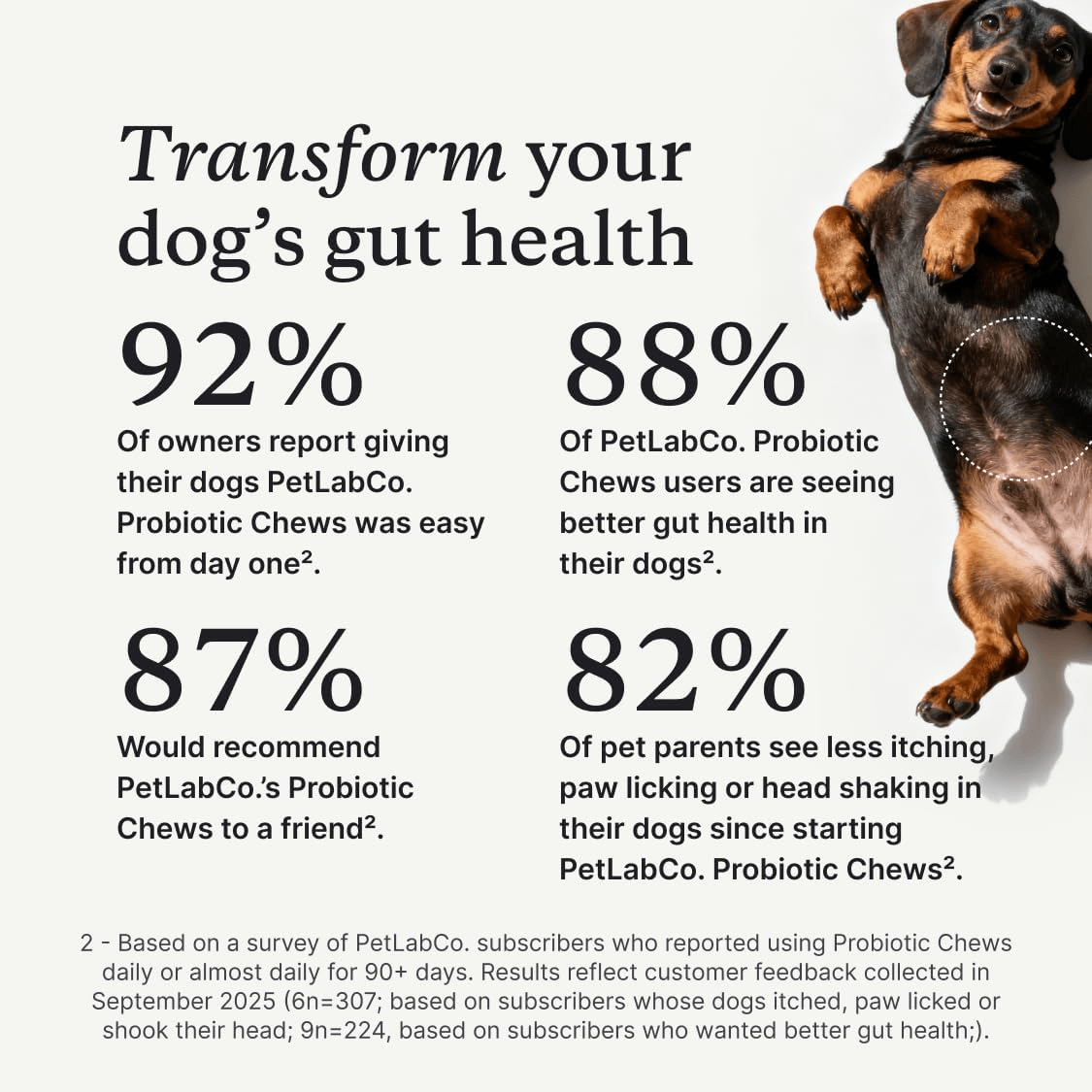
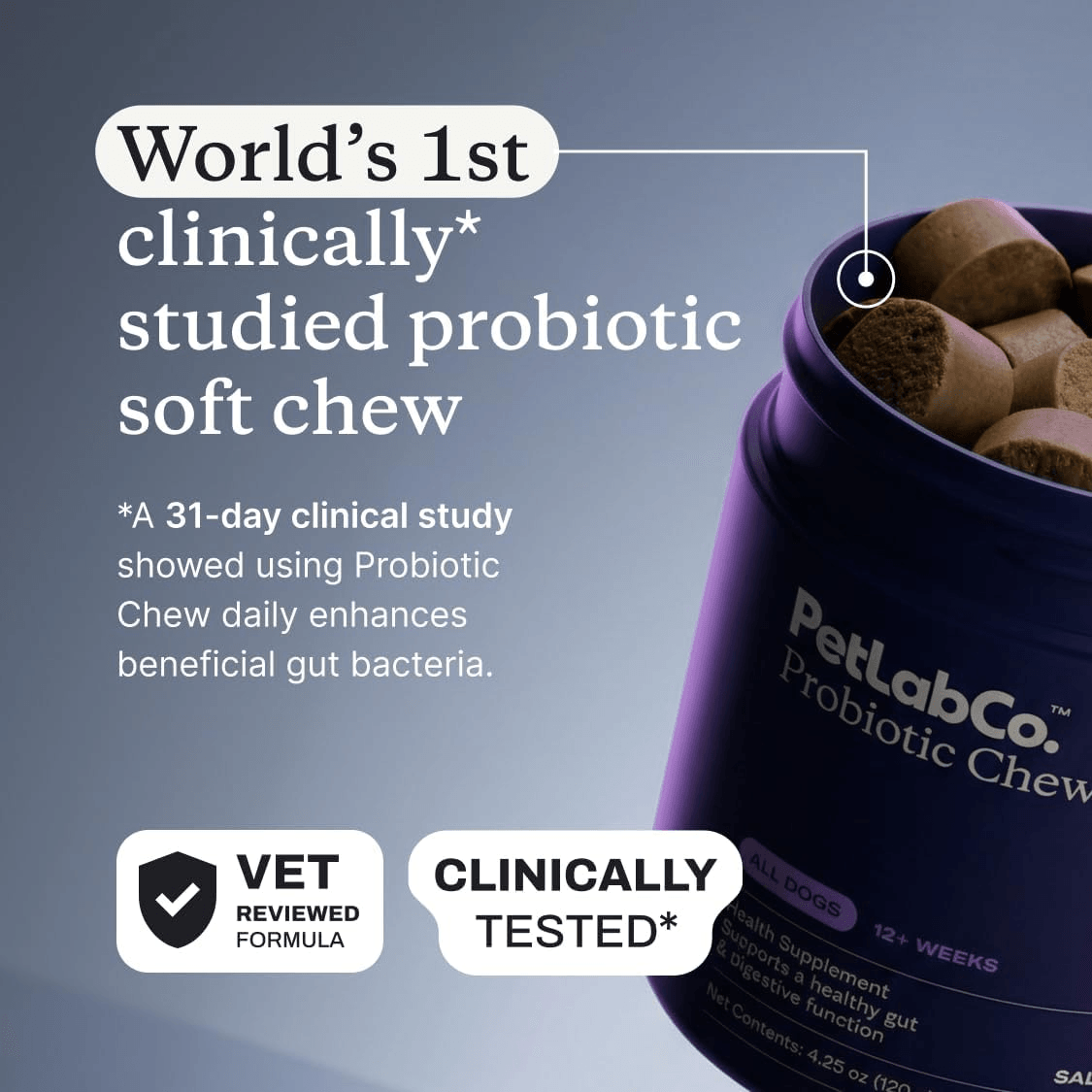

The product images above were supplied by the manufacturer or retailer. Statements visible inside those images are manufacturer claims; Pet Mess Rescue has not independently reproduced the surveys or clinical study. Product formulas and claims can change, so check the current label and discuss health concerns with your veterinarian.
Digestive signs that need veterinary care
repeated unproductive retching, a swollen or painful abdomen, suspected foreign object or toxin, collapse, pale gums, difficulty breathing, severe weakness, large amounts of blood, black/tarry stool, or a puppy with vomiting/diarrhea and lethargy. Possible xylitol ingestion is an emergency even before symptoms appear.
Arrange prompt evaluation for vomiting or diarrhea that repeats, lasts more than a brief episode, comes with appetite loss, pain, dehydration, fever, weight loss, excessive thirst, skin/ear disease, or affects a puppy, senior dog, or dog with another illness. Bring a fresh stool sample when the clinic requests one and photos of vomit or stool if safe to obtain.
Frequently asked questions
Are grain-free diets better for gut health?
Not by default. Grain is not a common universal problem, and the FDA has investigated diet-associated dilated cardiomyopathy involving some foods. Choose a diet for the individual dog with veterinary guidance rather than using "grain-free" as a quality score.
Is pumpkin a probiotic?
No. Pumpkin supplies fiber; it is not a live microorganism. The amount and type of fiber that helps depends on the cause of the stool problem, and too much can worsen imbalance.
Can I give my dog a human probiotic?
Do not assume a human product has appropriate strains, dose, excipients, or sweeteners for a dog. Some human products may contain xylitol or other unsuitable ingredients. Ask a veterinarian.
Sources and further reading
We use veterinary, public-health, animal-welfare, and official record sources whenever possible. Sources were checked July 26, 2026.
Quick answers
What is the best food for dog gut health?
There is no single best food for every dog. Start with a nutritionally complete diet appropriate for life stage and health, feed the right amount, change gradually, and use veterinary guidance for persistent symptoms.
Do dogs need a probiotic every day?
Not every healthy dog needs one. Evidence and product quality vary by strain, dose, condition, and formulation. Ask a veterinarian before using a probiotic for ongoing diarrhea, allergy signs, or a medical condition.
How slowly should I change dog food?
Many dogs tolerate a transition over about seven days, but sensitive dogs may need longer and medical diets may have different instructions. If vomiting, significant diarrhea, or appetite loss occurs, contact a veterinarian.
Can a dog food allergy cause itchy skin and diarrhea?
Food reactions can affect skin or digestion, but those signs have many causes. Diagnosis usually requires a veterinarian-directed elimination diet rather than rotating supplements and proteins at random.