Dogs probably love peanut butter because its roasted aroma is easy for their powerful noses to detect, its fat and protein make it energy-dense, and its sticky texture keeps the reward going. There is no single proven "peanut-butter receptor." It is a pileup of smell, taste, calories, and an excellent tongue workout.
Peanut butter also has a human advantage: it spreads into toys, hides a pill, and stays put longer than a dry biscuit. Your dog interprets this as evidence that civilization has finally made one sensible decision.
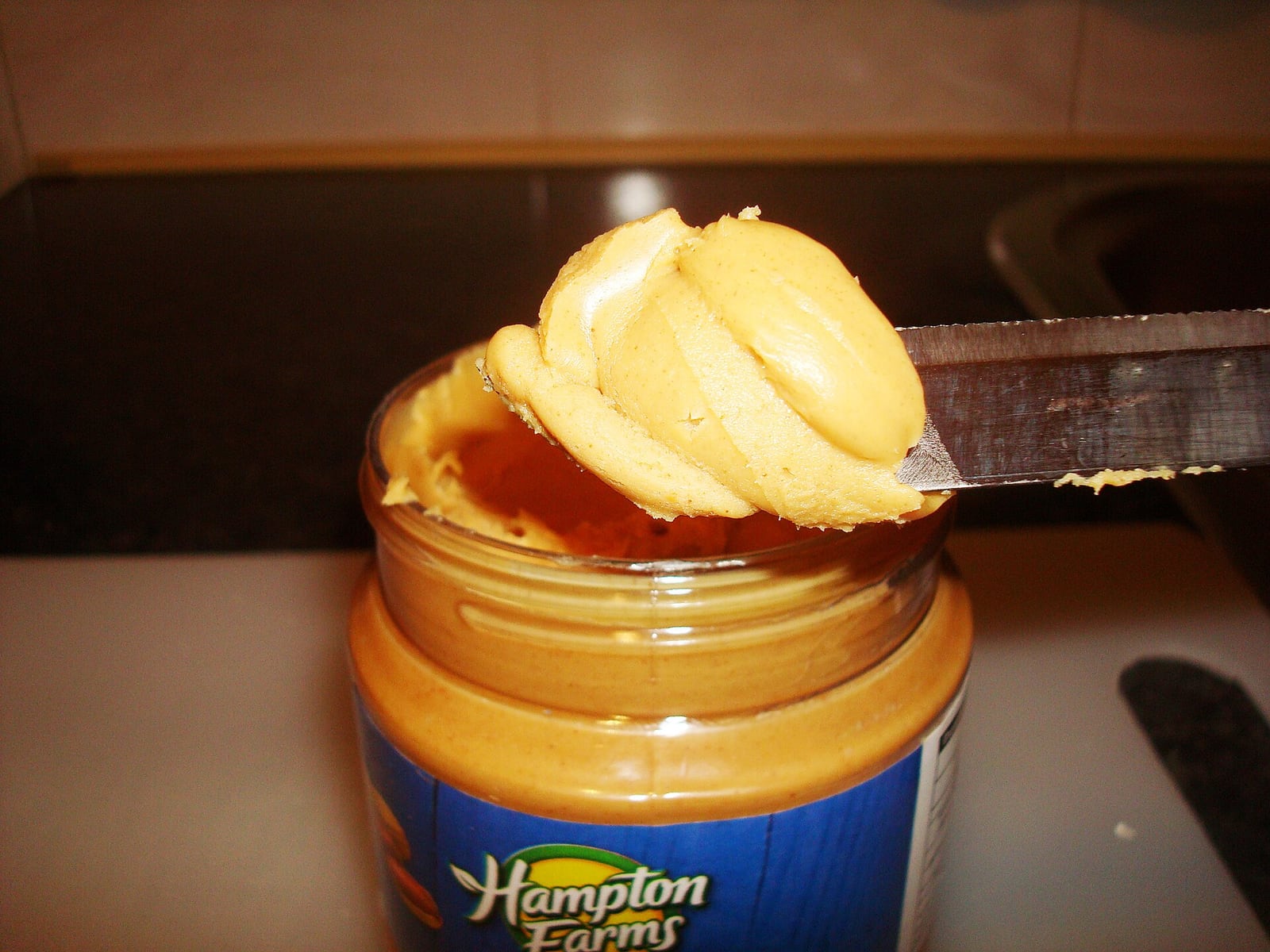
Why peanut butter is so compelling to dogs
A strong roasted smell
A dog's sense of smell is far more sensitive than ours. Roasted peanuts release volatile aromas that stand out, even when the serving is tiny or hidden in a toy.
Fat and flavor
Fat carries flavor and supplies a lot of calories in a small amount. That makes peanut butter highly rewarding, but it is also why a casual spoonful can become a large part of a small dog's daily calories.
The lickable texture
Sticky food takes time to remove from a lick mat or toy. Licking can be an absorbing activity, and spreading a thin layer creates a longer experience than dropping a blob into the bowl.
Learning and anticipation
If the jar opening predicts a stuffed toy, medicine followed by praise, or your undivided attention, the sound and smell become cues. Soon the dog appears before the lid is fully unscrewed, because subtlety has left the building.
The peanut-butter safety checklist
Never give a dog peanut butter containing xylitol, sometimes labeled birch sugar. The FDA warns that xylitol can cause a dangerous insulin surge and severe low blood sugar in dogs; higher exposures may injure the liver. If a dog may have eaten it, call a veterinarian or emergency animal hospital immediately. Do not wait for symptoms and do not induce vomiting unless a professional directs you.
- Read every ingredient. Choose a simple product with peanuts and perhaps salt. Recheck repeat purchases because formulas change.
- Avoid chocolate, raisins, macadamia nuts, and added candy pieces. A dessert spread is not dog peanut butter.
- Watch sodium and sugar. Dogs do not need either added for enjoyment.
- Ask before serving to dogs with pancreatitis, obesity, diabetes, food allergy, kidney/heart disease, or a veterinary diet.
- Count the calories. Treats and extras should generally remain a small portion of the complete daily diet.
- Use a thin smear, not a jaw-sealing scoop. Supervise, especially with small dogs or dogs that gulp.
How much peanut butter can a dog have?
There is no safe universal spoon size. A teaspoon has the same calories whether it goes to a Chihuahua or a Great Dane, but it represents very different portions of their day. Check the label's calories, include all other treats, and ask your veterinarian for a calorie target.
| Dog situation | Practical approach | Why |
|---|---|---|
| Small dog | Use a very thin smear | Energy-dense foods add up quickly |
| Training session | Dot tiny amounts on a spoon or lickable tube | Many repetitions without one large serving |
| Stuffed toy | Coat the inside, then fill mostly with regular food | Extends the activity with fewer extra calories |
| Pill delivery | Use only enough to hide the medicine, if the medication allows food | Reduces calories and swallowing risk |
Useful, less-messy ways to serve it
- Spread a transparent-thin layer on a lick mat and supervise.
- Mix a small amount with part of the dog's regular food and freeze it in a durable food toy.
- Use a tiny dab to reward nail-handling practice, cooperative grooming, or calm crate entry.
- For medication, confirm with the prescribing veterinarian that the pill can be given with food and should not be crushed.
- Wash enrichment toys after use. Dried peanut butter has the structural ambitions of grout.
Frequently asked questions
Can puppies eat peanut butter?
A healthy puppy may be able to have a tiny xylitol-free amount, but growth diets need careful calorie balance. Ask your veterinarian and introduce only one new food at a time.
Can dogs be allergic to peanuts?
Yes, food reactions are possible. Stop serving it and seek urgent care for facial swelling, hives, repeated vomiting, weakness, or trouble breathing.
Is "natural" peanut butter automatically safe?
No. "Natural" is not an ingredient list. Check for xylitol/birch sugar, chocolate, excess sodium, and other additions.
Sources and further reading
We use veterinary, public-health, animal-welfare, and official record sources whenever possible. Sources were checked July 26, 2026.
Quick answers
Can dogs eat peanut butter?
Many dogs can have a small amount of plain peanut butter that contains no xylitol or birch sugar and fits their calorie needs. Dogs with allergies, pancreatitis, obesity, or prescribed diets need veterinary guidance.
Why is xylitol dangerous to dogs?
Xylitol can trigger a rapid insulin release in dogs, causing life-threatening low blood sugar; higher exposures can also cause liver injury. Treat possible ingestion as an emergency.
Can dogs eat crunchy peanut butter?
Small pieces of peanut are not automatically toxic, but smooth peanut butter is easier to spread thinly and may be a better choice for small dogs or enrichment toys. Check every ingredient label.
Does peanut butter give dogs diarrhea?
Fat, a large portion, sweeteners, or an individual sensitivity can cause stomach upset. Stop serving it and contact a veterinarian if symptoms are significant or persistent.