Feline cerebellar hypoplasia, or CH, is an underdevelopment of the brain region that coordinates movement and balance. It causes a lifelong wobbly gait, wide stance, intention tremors, and inaccurate steps, but it is usually nonprogressive and not painful. Many affected cats have a normal lifespan with an adapted indoor home.
People often call them "wobbly cats." The nickname is accurate, affectionate, and slightly incomplete: these cats are also climbers, negotiators, snack analysts, and determined inventors of routes you did not approve. Good care supports that independence while lowering the cost of a missed step.
Confirm the diagnosis and severity
A veterinarian should examine any kitten or cat with tremors, falling, a wide stance, or poor coordination. CH is present from birth, although it may become obvious when a kitten starts walking. Other infections, toxins, injuries, inner-ear disease, metabolic problems, and neurologic disorders can look similar and may require different treatment.
VCA describes the signs as nonprogressive. That distinction is useful: a familiar wobble that becomes more obvious during excitement can fit CH; a new head tilt, weakness, seizure, pain, appetite loss, circling, or continuing decline does not get a free pass.
| Typical CH pattern | Needs a fresh veterinary assessment |
|---|---|
| Signs present since kittenhood | Sudden onset in a previously coordinated cat |
| Worse while reaching, eating, or excited | Progressive weakness, collapse, or inability to rise |
| Normal awareness and interest | Confusion, seizures, severe lethargy, or behavior change |
| Nonpainful movement difference | Crying, hiding, guarding, limping, or painful touch |
Build a home where a fall stays small
Cover travel lanes with traction
Secure low-pile rugs, rubber runners, or washable mats between bed, food, litter, and favorite social areas. Avoid loose fabric that bunches under a scrambling paw.
Keep destinations low and wide
Offer broad floor-level beds, low platforms, and shallow ramps with side edges. Block access to open stairs, balconies, tall shelving, and narrow perches.
Pad collision points
Cover hard furniture corners and place washable padding beside favorite routes. Keep cords, glass, unstable lamps, and heavy objects out of fall zones.
Make a small safe room first
When the cat is new, begin with food, water, litter, bed, scratcher, hiding spot, and toys in one quiet room. Expand territory as the cat develops reliable routes.
Protect without immobilizing
Let the cat practice safe movement. Constant carrying prevents skill-building and can be frustrating. Intervene for true hazards, not every harmless wobble.
Make the litter box easy to enter and hard to tip
The ideal CH litter box has a low front doorway, generous turning room, stable base, and higher walls on the other sides. Place a non-slip washable mat under and in front of it. An open box is often easier than a small covered box because the cat can brace, see the edges, and exit without negotiating a flap.
- Offer at least one box per cat plus one extra, distributed where the CH cat spends time.
- Choose soft, unscented litter and begin with a shallow layer so unstable paws do not sink deeply.
- Scoop at least daily; a cat with limited balance should not have to weave around old clumps.
- Keep a waterproof, washable layer under the mat and trim soiled fur gently when needed.
- If the cat falls while posturing, ask the veterinarian or a feline rehabilitation professional about box shape, constipation, pain, and supportive positioning.
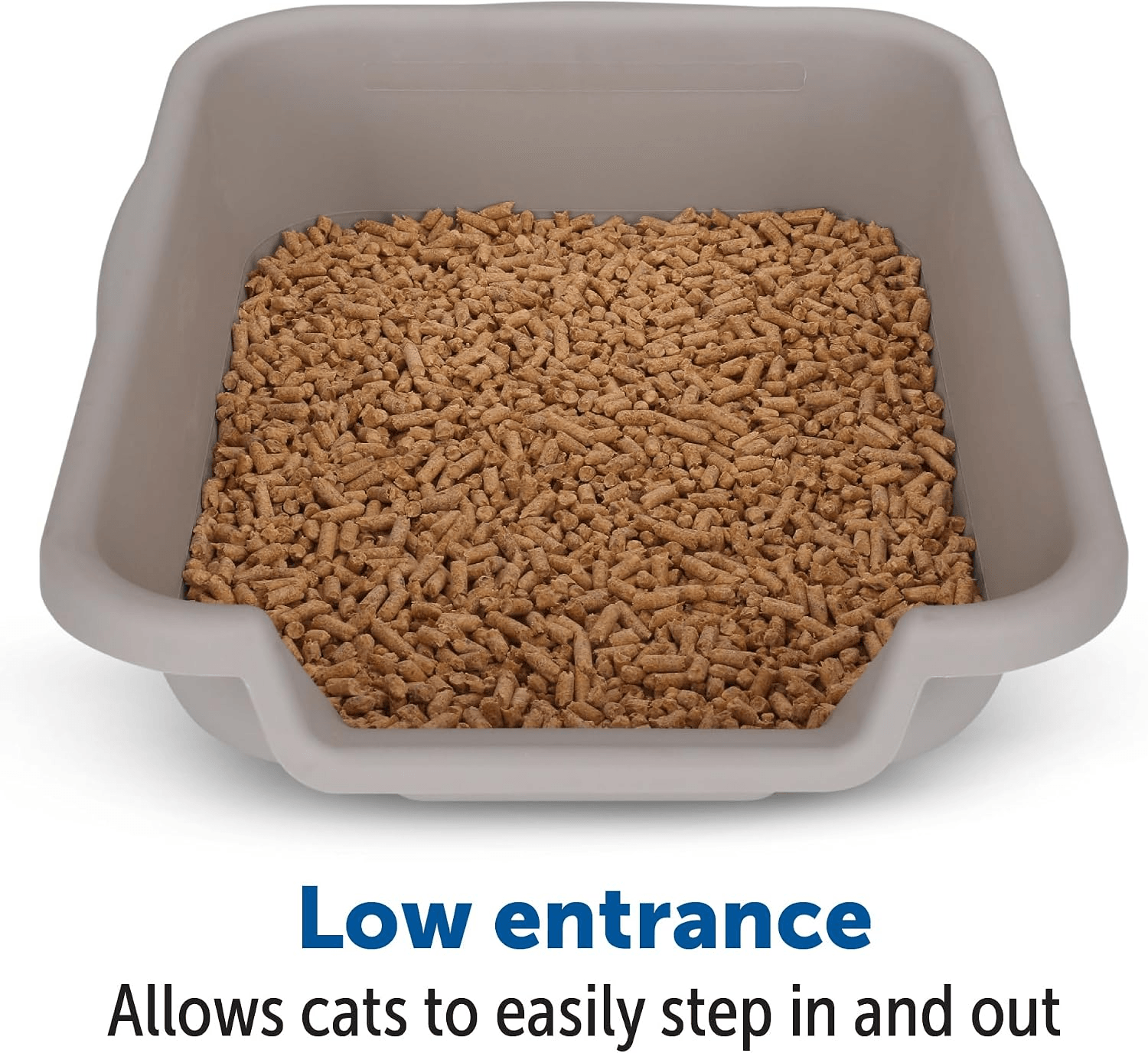
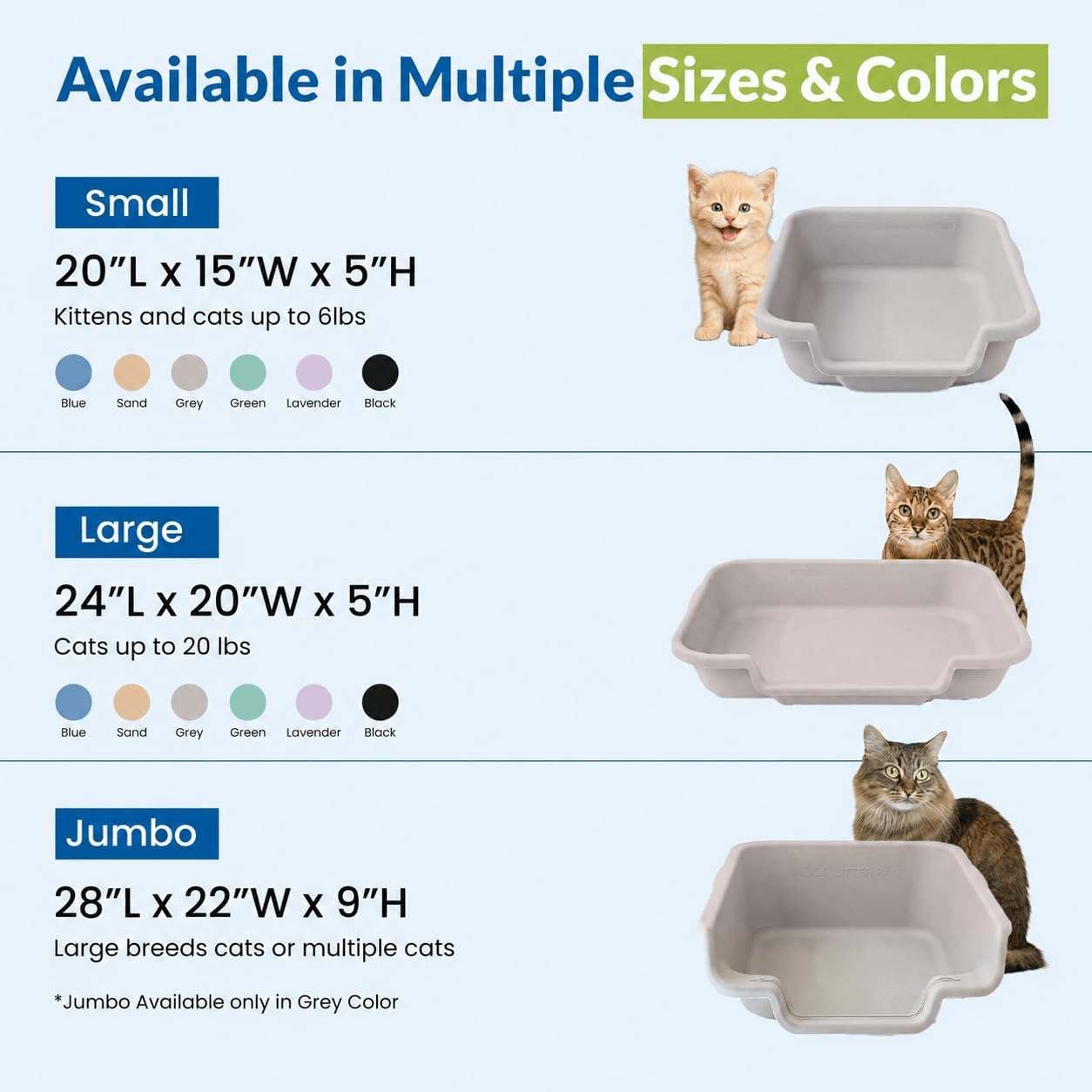
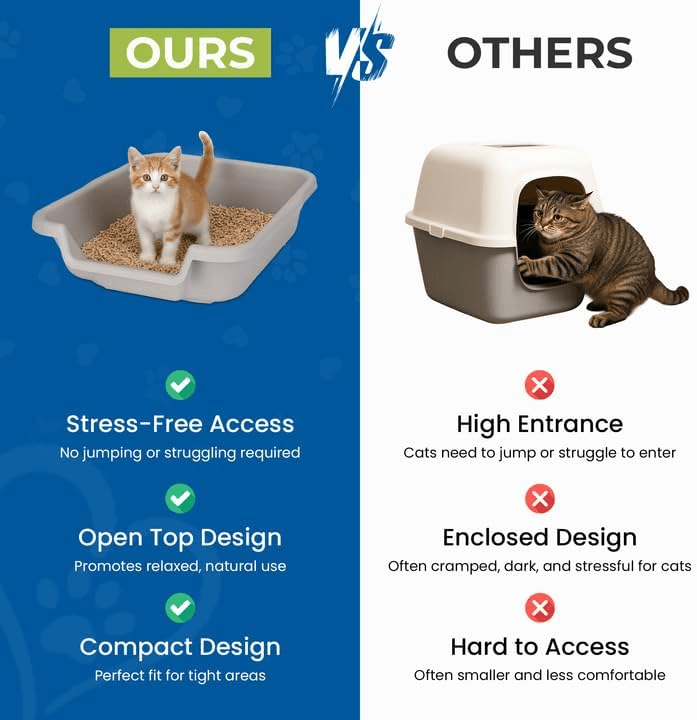
KittyGoHere Senior Cat Litter Box
An open litter tray with a low front entrance intended for senior or mobility-limited cats. The broad floor gives a wobbly cat more room to turn and brace than many compact covered boxes.
Best for: A CH cat who can toilet independently but struggles with a standard high entrance or tight enclosure.
Watch for: Choose the correct size, stabilize it on a non-slip mat, use a manageable litter depth, and expect scatter around the low doorway.
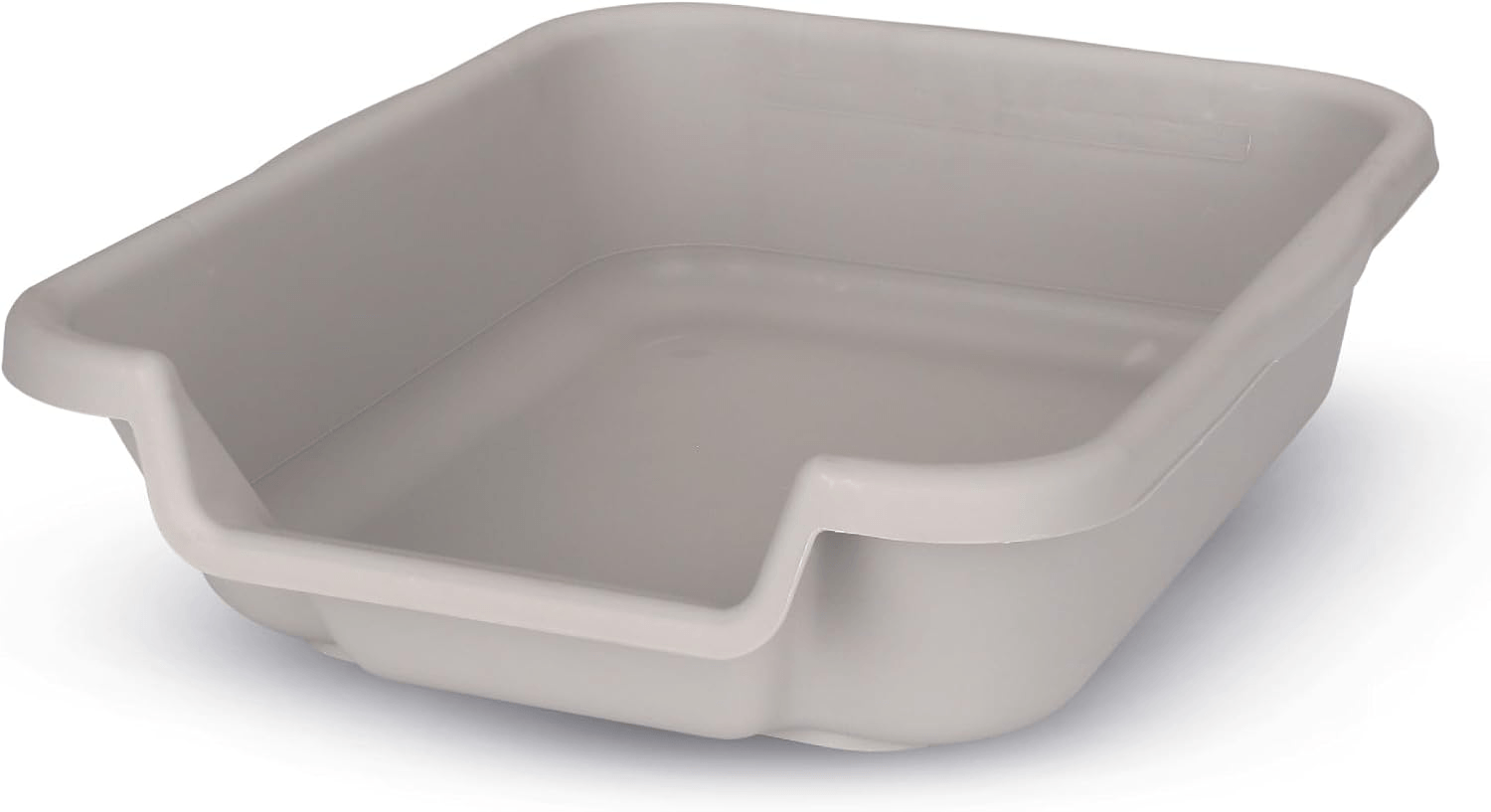
Product photographs and comparison graphics were supplied for this guide and reflect manufacturer or retailer materials. Dimensions and colors can change; verify the current listing before choosing a size.
Food and water without the face-first finale
Use heavy, wide, non-slip bowls that cannot skate across the floor. Some cats eat more comfortably from a shallow plate with a low rim; others brace against a stable raised edge. Place a washable mat beneath the station and leave generous space around it.
- Keep food and water locations consistent.
- Offer several water stations if long travel is tiring.
- Watch body weight and muscle condition; difficulty reaching food can look like pickiness.
- Clean the chest, paws, or face after messy meals and dry the coat fully.
- Ask the veterinarian about swallowing if coughing, gagging, repeated regurgitation, or food inhalation is suspected.
Play, scratching, grooming, and other normal-cat business
Offer floor-level wand play, soft kick toys, wide cardboard scratchers, puzzle feeders that do not roll away, and tunnels with broad openings. Move toys slowly enough to track and let the cat capture them often. A game that is ninety percent falling and zero percent winning is poor entertainment design.
Brush gently, inspect nails and paw pads, and check elbows, hips, chin, and hocks for scrapes. Many CH cats use claws for traction, so discuss trimming length with the veterinary team rather than removing every useful point. Declawing removes part of each toe and is not an accessibility solution.
Handle the cat with one hand supporting the chest and the other supporting the pelvis. Do not lift by the front legs or scruff for routine transport. Use a stable carrier with a low doorway, padding, and enough room to lie down without being thrown across a large empty interior.
Routine health care still applies
CH does not protect a cat from dental disease, parasites, obesity, urinary illness, arthritis, or every ordinary cat complaint. Keep vaccinations, parasite prevention, spay/neuter care, dental checks, and weight monitoring individualized with a veterinarian. Bring videos of movement on different surfaces if a change is intermittent.
New or worsening imbalance, head tilt, repetitive eye movement, seizures, inability to eat, repeated vomiting, pain, collapse, trouble breathing, inability to urinate, or a sudden loss of learned skills is not "just the CH."
Sources and further reading
We use veterinary, public-health, animal-welfare, and official record sources whenever possible. Sources were checked July 26, 2026.
Quick answers
Does feline cerebellar hypoplasia get worse?
Typical congenital cerebellar hypoplasia is nonprogressive: the brain difference does not continue degenerating. A cat may look steadier with practice or wobblier when tired or excited. True new decline needs a veterinary exam.
Are cats with cerebellar hypoplasia in pain?
CH itself is not considered painful. Falls, arthritis, dental disease, wounds, or an unrelated illness can still hurt, so pain behavior should never be attributed to wobbliness without an exam.
Can a wobbly cat use a litter box?
Many can. A large stable box with a low front entrance, high walls elsewhere, non-slip approach, and soft unscented litter is often easier. Some cats need more than one nearby box.
Can a CH cat live with other pets?
Yes, when housemates are calm and introductions are gradual. The CH cat needs escape options that do not require a high jump and protection from chasing or resource guarding.
Should a cerebellar hypoplasia cat go outside?
Unsupervised outdoor access is unsafe because balance limits escape from traffic, predators, dogs, heights, and other hazards. A secure enclosure or harness-trained supervised time is safer.