Do not assume bumping into things is simply aging. Eye pain, redness, squinting, cloudiness, enlarged pupils, discharge, sudden disorientation, head trauma, vomiting, or rapid vision loss calls for prompt care. Some eye conditions are painful and some have a narrow treatment window.
Once a veterinarian has identified the cause and addressed pain, most of the daily work is wonderfully practical: stable routes, useful cues, protected hazards, and enough freedom for the dog to learn. A blind dog is not helpless. The nose, ears, whiskers, memory, and paws are still collecting an enormous amount of information, including the exact coordinates of any cheese opened three rooms away.
Make important things easy to find, make dangerous things hard to reach, and let the dog solve safe problems independently. Predictability builds confidence faster than constant rescuing.
Set up a blind-dog-friendly home
Freeze the basic map
Keep food, water, beds, doors, and major furniture in stable locations. Leave wide lanes between resting areas and exits. Push chairs in and close cabinets so yesterday's clear route does not become today's shin-level surprise.
Block true hazards
Use secure gates at stairs, pools, balconies, fireplaces, and construction areas. Pad sharp corners at head height, cover floor vents that catch nails, and keep cords and clutter out of travel lanes.
Add texture landmarks
Place different non-slip mats near the water bowl, exterior door, bed, and stair boundary. The texture underfoot tells the dog where they are without turning the house into a maze of decorative rugs.
Use scent lightly and safely
A tiny, consistent scent on an object can mark a location, but avoid essential oils, strong cleaners, or anything the dog could lick. Familiar household smells and food-location memory are often enough.
Protect the stairs twice
Use a physical gate and teach a verbal cue such as "step." Contrast strips help dogs with partial sight. Never rely only on a scent marker or a command at an open drop.
Give other pets a way to announce themselves
A light bell on a housemate's breakaway collar may help if the other animal tolerates it. Supervise interactions, especially around food, beds, and narrow passages.
Build confidence with words, sound, and choice
Teach a small vocabulary that pays rent
Useful cues include stop, step up, step down, left, right, easy, wait, and a cheerful orientation word such as here. Teach one cue at a time with rewards on a quiet, non-slip surface. Say the cue before the change, not after the dog has met it face-first.
Announce contact
Speak before touching a sleeping or resting blind dog. Ask visitors to let the dog approach, and keep hands low enough to sniff. Startled dogs are not being difficult; they are reacting to information that arrived late.
Use sound without creating a sonic theme park
Your voice, a target click, a softly tapped food bowl, or a toy with a gentle sound can help orientation. Constant television, loud tags, or competing noise can make useful signals harder to locate. Quiet is information too.
Play to the senses that remain
Try scent games, food puzzles that do not slide, short tracking trails, textured toys, and supervised tug. Introduce one new object in a familiar open area. Blind dogs still need enrichment; boredom does not politely excuse itself because the eyes retired.
Walks, yards, cars, and unfamiliar places
- Use a well-fitted harness and standard leash. A harness gives steadier guidance than pulling on the neck. Avoid retractable leashes near traffic, stairs, crowds, or unfamiliar ground.
- Preview the route. Start with short, quiet paths and use the same curb and surface cues. Let the dog sniff; scent is part of navigation, not a delay in your spreadsheet.
- Identify the dog. Keep microchip and tag details current. A tag that says "I am blind" can help a finder approach safely.
- Secure the yard. Check fences, gates, holes, branches, pools, and garden tools before off-leash time. Supervise even in a familiar yard.
- Guide car entry. Use a ramp or controlled lift if needed, then secure the dog with an appropriate restraint. Do not let a blind dog jump toward an unseen gap.
- Rebuild the map after travel. At a hotel or family home, walk the perimeter slowly, locate water and bed, then keep luggage out of the established path.
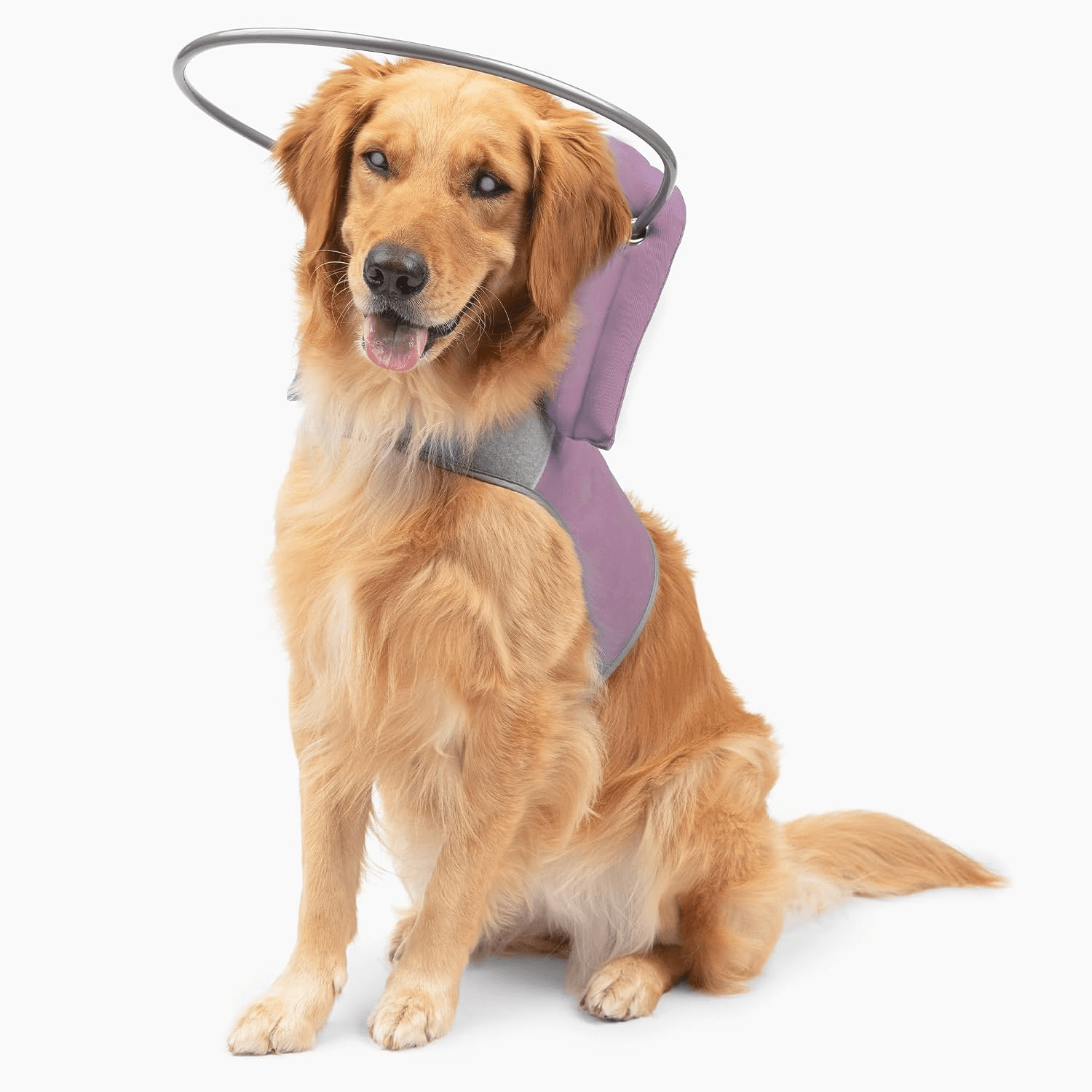
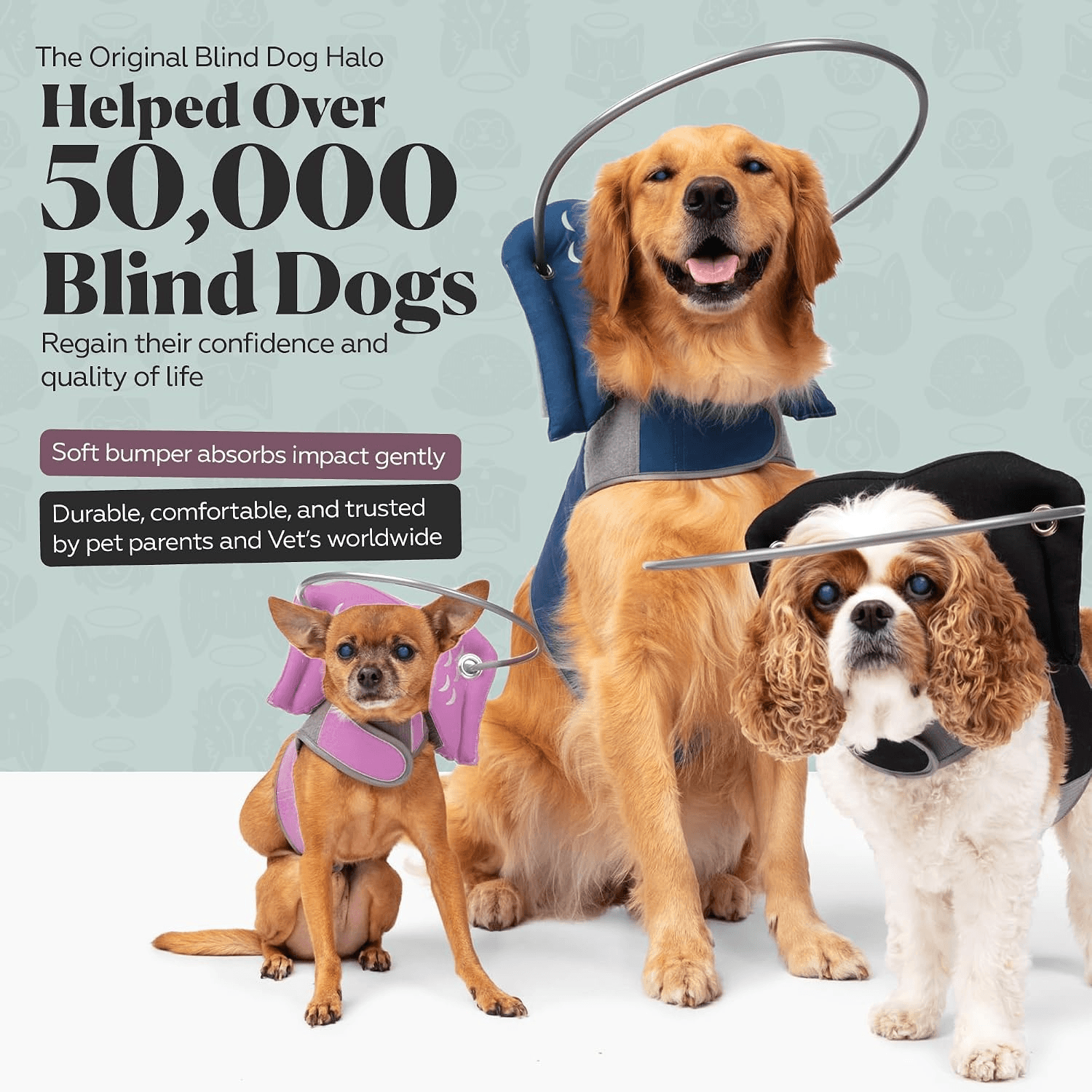
Where a blind-dog halo may help
A mobility halo is an optional environmental aid. The ring reaches ahead of the muzzle and transfers light contact to a harness so some dogs can learn where obstacles are before their face hits them. It may be useful for a newly blind dog, an unfamiliar room, low obstacles that whiskers miss, or a dog whose confidence has fallen after repeated bumps.
It is not a treatment for blindness, a substitute for gates, or a reason to leave a dog unattended. Some dogs adapt quickly; others freeze, rub, or dislike the added width. Introduce it for a few rewarded minutes on an open floor, then gradually add simple routes.
Fit and use checklist
- Measure neck and chest girth using the current maker's chart; do not guess from weight alone.
- The ring should extend beyond the nose, sit above eye level, and remain centered without pressing the throat, shoulders, or ears.
- Check the skin under every strap after short sessions, especially on thin-coated or fragile senior skin.
- Supervise around furniture, shrubs, other animals, and narrow gaps where the ring could catch.
- Remove the device for crating, unsupervised rest, rough play, and any situation the manufacturer excludes.
- Stop if the dog pants from stress, refuses to move, chafes, repeatedly catches the ring, or seems less safe.
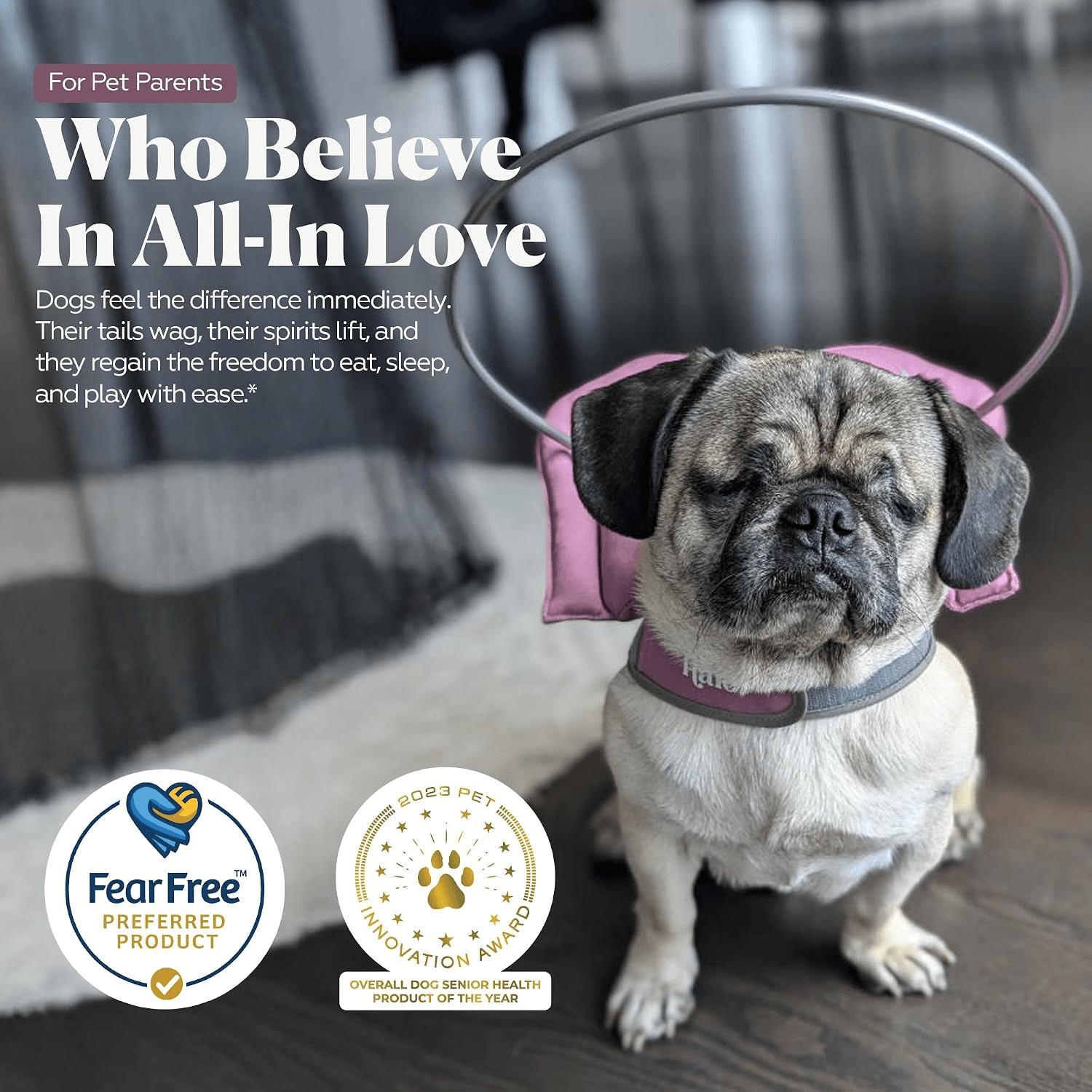
Muffin's Halo for Blind Dogs
A harness-mounted bumper designed to contact obstacles before a blind dog's face. It can be most useful while a dog learns a new map or regains confidence after repeated collisions.
Best for: A veterinarian-cleared blind dog who still wants to walk and explore but needs an early obstacle cue.
Watch for: Measure with the current chart, introduce gradually, inspect for rubbing, supervise every session, and remove before crating or unsupervised rest.
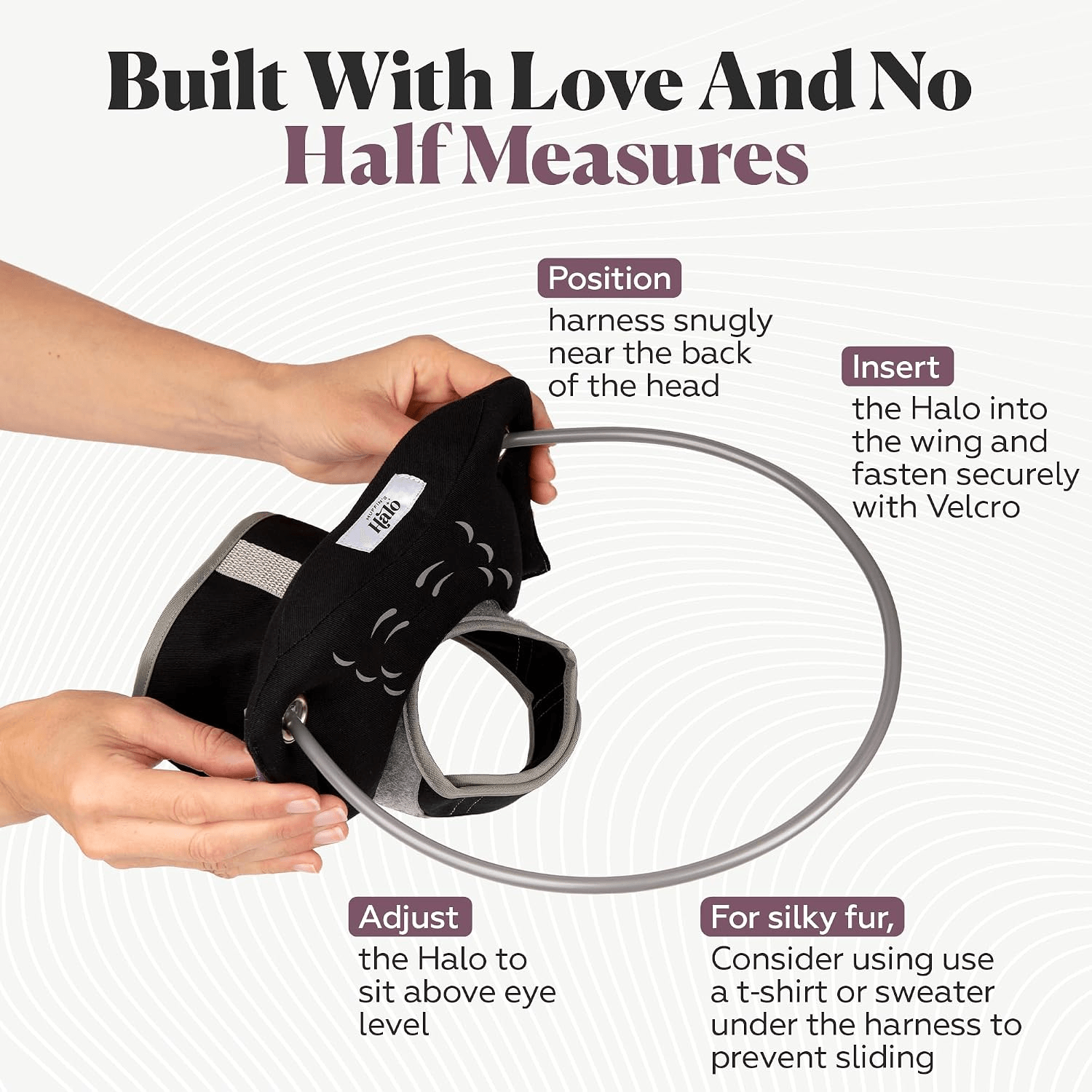
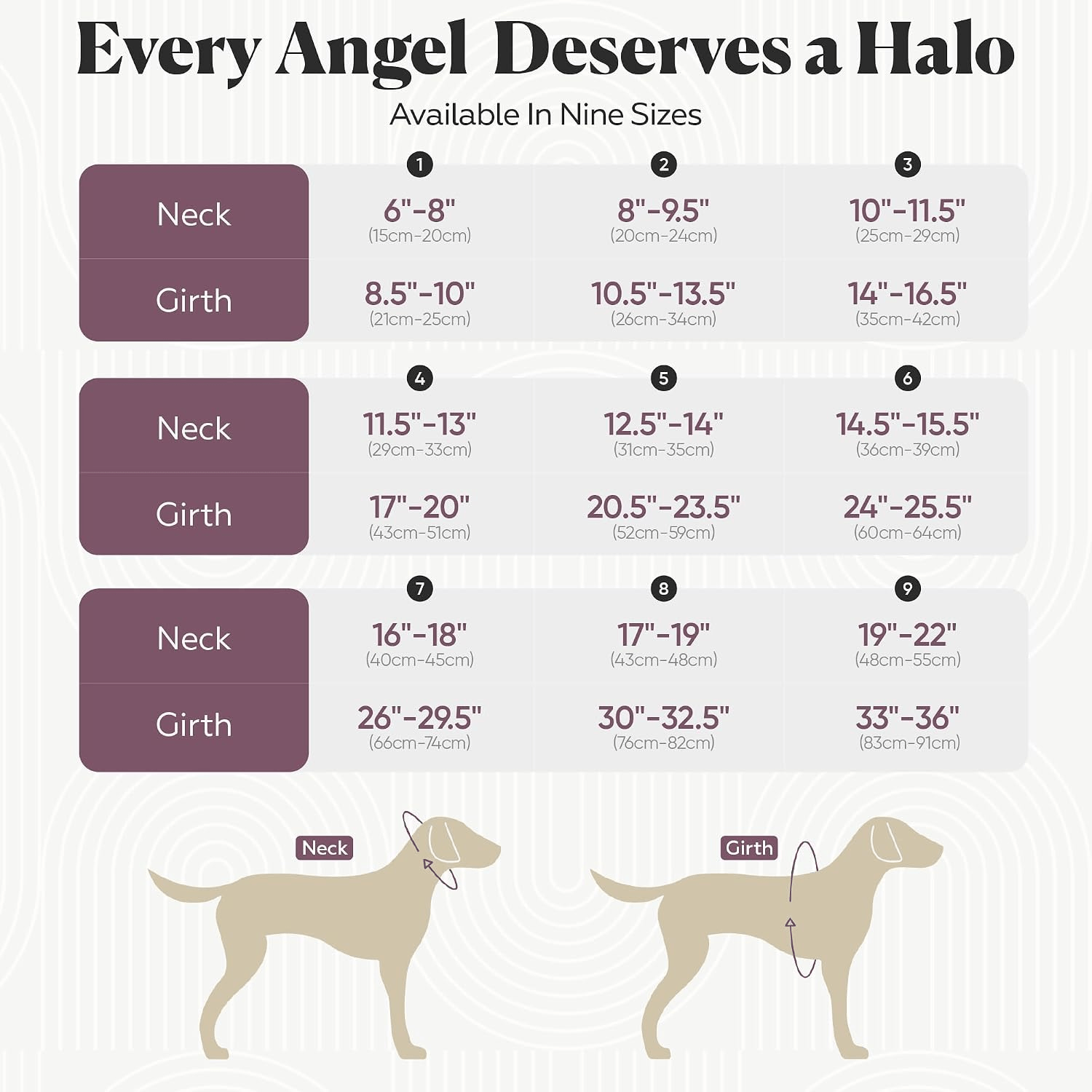
Product photographs and fit graphics were supplied for this guide and reflect manufacturer or retailer materials. They illustrate construction and sizing, not a guarantee that the device will suit every dog.
A simple daily care checklist
| Check | What to notice | Why it matters |
|---|---|---|
| Eyes | Redness, squinting, rubbing, discharge, swelling, cloudiness | A blind eye can still be painful or develop disease. |
| Route | Moved chairs, bags, open doors, new cords, wet floors | Small changes can break a memorized path. |
| Paws and nails | Overgrown nails, worn pads, slipping, scuffs | Traction and tactile feedback are central to navigation. |
| Behavior | New fear, circling, nighttime pacing, appetite or sleep change | Not every new problem is caused by blindness. |
| Joy | Interest in food, family, sniffing, play, and comfortable rest | Quality-of-life trends matter more than one awkward moment. |
When the care plan needs another veterinary visit
Arrange an exam for eye pain or redness, repeated rubbing, discharge, a change in eye shape, new falls, circling, seizures, head tilt, weakness, appetite loss, sleep disruption, or a sudden behavior change. A dog who was already blind can develop a separate neurologic, painful, hearing, or cognitive problem. Seek urgent care for acute blindness, severe eye pain, trauma, collapse, repeated vomiting, or inability to stand.
Sources and further reading
We use veterinary, public-health, animal-welfare, and official record sources whenever possible. Sources were checked July 26, 2026.
Quick answers
Can a blind dog have a good quality of life?
Yes. Many blind dogs adapt very well when pain and underlying disease are managed and their home, training, and routines are made predictable. Quality of life depends on the whole dog, not eyesight alone.
Should I carry my blind dog everywhere?
Usually no. Safe, supervised movement helps a dog build a mental map and retain confidence. Carrying may be needed on dangerous stairs, during recovery, or when a veterinarian recommends it.
Do blind-dog halos work?
A correctly fitted halo can act as a bumper around the face and may help some dogs explore with fewer collisions. It does not restore vision, replace supervision, or suit every dog.
Can I move the furniture after my dog goes blind?
Keep routes stable at first. Necessary changes can be introduced one at a time while you guide the dog through the new route with scent, texture, and verbal cues.
Is sudden blindness an emergency?
Sudden vision loss, eye pain, redness, cloudiness, a dilated pupil, vomiting, disorientation, or head trauma needs prompt veterinary care. Some causes are painful or time-sensitive.