Degenerative myelopathy, often shortened to DM, is a progressive spinal-cord disease that typically begins with hind-limb incoordination and weakness. There is no cure, but rehabilitation and careful home support can help a dog remain active and comfortable for as long as possible.
Disc disease, orthopedic pain, tumors, infection, trauma, tick paralysis, and other neurologic problems can look similar, and some are treatable or urgent. Sudden weakness, pain, inability to urinate, collapse, breathing trouble, or rapid decline needs prompt veterinary care.
A DM care plan is less about one heroic purchase and more about dozens of small, repeatable decisions: a rug where a paw used to slide, a towel before damp skin breaks down, a supported bathroom trip before fatigue becomes a fall. The dog does not need a motivational speech. The dog needs traction.
Get the diagnosis and a baseline first
Cornell and UC Davis describe DM as a diagnosis of exclusion. A veterinarian or neurologist uses the history, neurologic examination, imaging or other tests, and sometimes genetic risk testing to rule out conditions that can mimic it. A DNA result shows risk; it does not prove that current weakness is caused by DM.
Ask the care team to document a baseline: ability to rise, paw placement, nail scuffing, walking distance, falls, urination and bowel control, front-limb strength, body weight, and comfort. Short videos on the same floor and route every one or two weeks can reveal trends that memory smooths over.
Turn the home into a low-friction workplace
Create continuous traction
Use secured runners, yoga mats, or rubber-backed rugs from bed to water to door. A single island of carpet does not help if the dog must cross six feet of slick floor to reach it.
Replace jumps with ramps
Block furniture jumping and add a stable, low-angle ramp where practical. Use gates at stairs. If stairs cannot be avoided, support both ends of the dog and have a rehabilitation professional teach the technique.
Use a supportive bed
Choose a dry, washable bed that is easy to enter, firm enough to push against, and padded enough to protect hips and ankles. Reposition a dog who cannot shift independently.
Raise or stabilize bowls only when it helps
Place water on a non-slip surface and make it easy to reach. Bowl height should match the individual dog's balance and any swallowing guidance; elevated is not universally better.
Protect dragging paws
Keep nails short and inspect the tops of toes after every outing. Properly fitted protective boots may reduce scraping, but they can also alter paw placement or cause rubbing, so introduce them with professional guidance.
Exercise, rehabilitation, and preventing secondary decline
Controlled activity helps preserve muscle, joint motion, circulation, and the dog's involvement in daily life. Cornell notes that physical rehabilitation may delay progression, although it does not cure DM. The correct program depends on stage, fatigue, orthopedic disease, heart and lung health, and the dog's willingness.
- Favor several short supported walks over one exhausting outing.
- Stop before the gait collapses. Fatigue increases falls and toe dragging.
- Ask about range-of-motion work, balance exercises, underwater treadmill, swimming safety, massage, and front-limb conditioning.
- Keep the dog lean enough that every transfer is easier, without allowing illness-related weight or muscle loss to go uninvestigated.
- Use video follow-ups or rechecks to adjust the program as function changes.
A dog who cannot recover after exercise, pants unusually, becomes distressed, develops sores, or is weaker later that day needs the plan reduced and reviewed. Rehabilitation should be prescribed, not improvised from an ambitious montage.
Using a rear-support sling safely
A rear sling can help a dog keep the hindquarters upright during short walks, toileting, vehicle transfers, or unavoidable steps. It should support without squeezing the abdomen, genitals, mammary tissue, or an incision. It is not a carry bag and should not lift the rear so high that the front legs take a sudden extra load.
- Measure the body, not the breed label. Follow the current size chart and check the front-to-back width between the legs.
- Place the panel smoothly. Center it beneath the pelvis or abdomen as the product directs, with no twisted edge or trapped skin.
- Adjust both handles evenly. Keep the spine level and allow the rear paws to touch when the dog can still use them.
- Walk beside the dog. Use short, slow sessions on traction. Do not pull forward from behind.
- Inspect after use. Check groin, belly, and inner thighs for redness, dampness, hair pulling, or pressure.
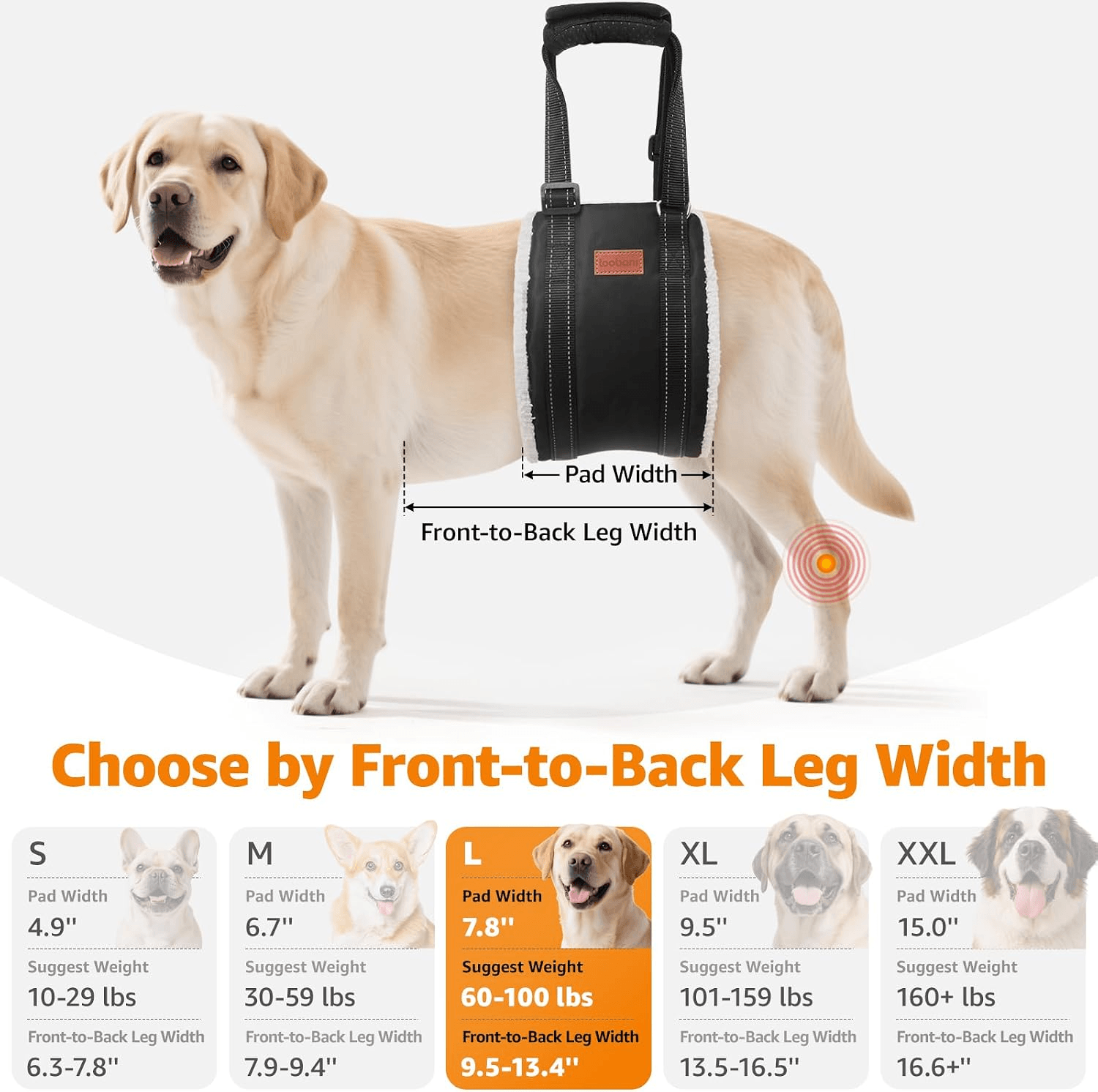
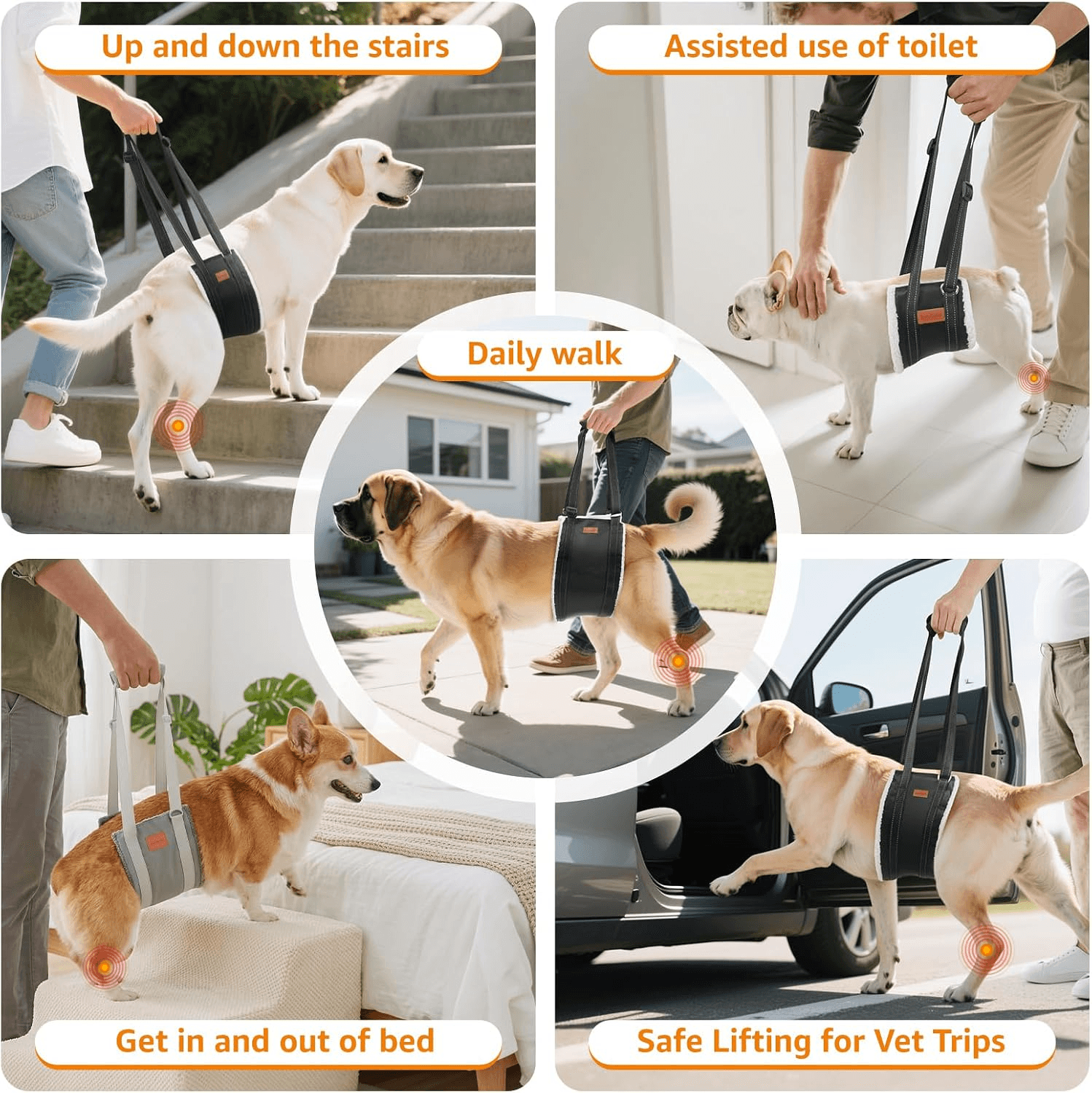
LOOBANI Portable Dog Sling for Back Legs
A padded, adjustable rear-lift sling intended to support dogs with hind-limb weakness during short walks, toileting, steps, and transfers. The handles allow the person to share weight while the dog continues using the front legs.
Best for: Short, supervised mobility tasks after a veterinarian or rehabilitation professional has shown where and how to support the dog.
Watch for: Measure carefully, avoid pressure on the abdomen or genitals, keep the spine level, protect your own back, and stop for rubbing, distress, breathing change, or front-limb fatigue.

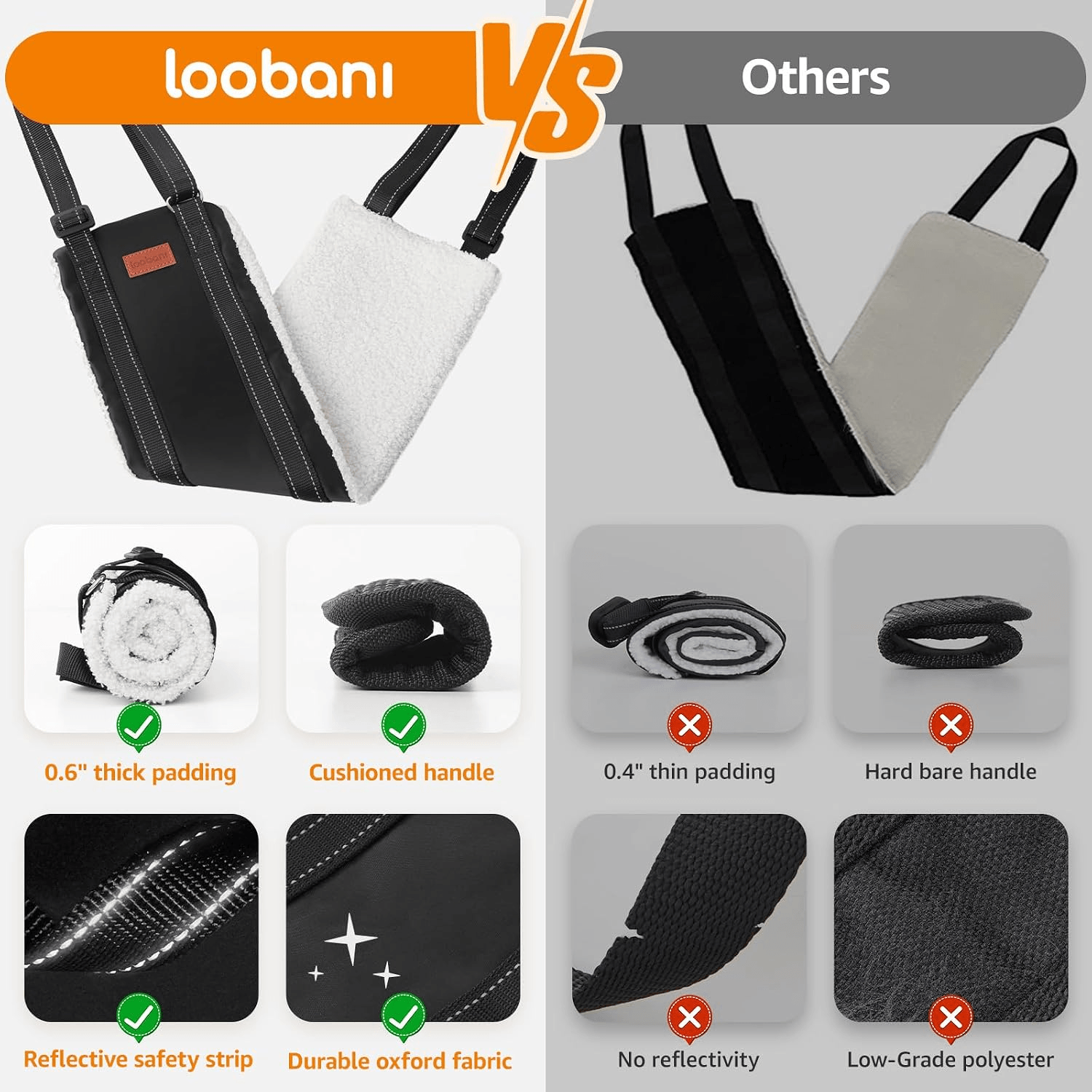
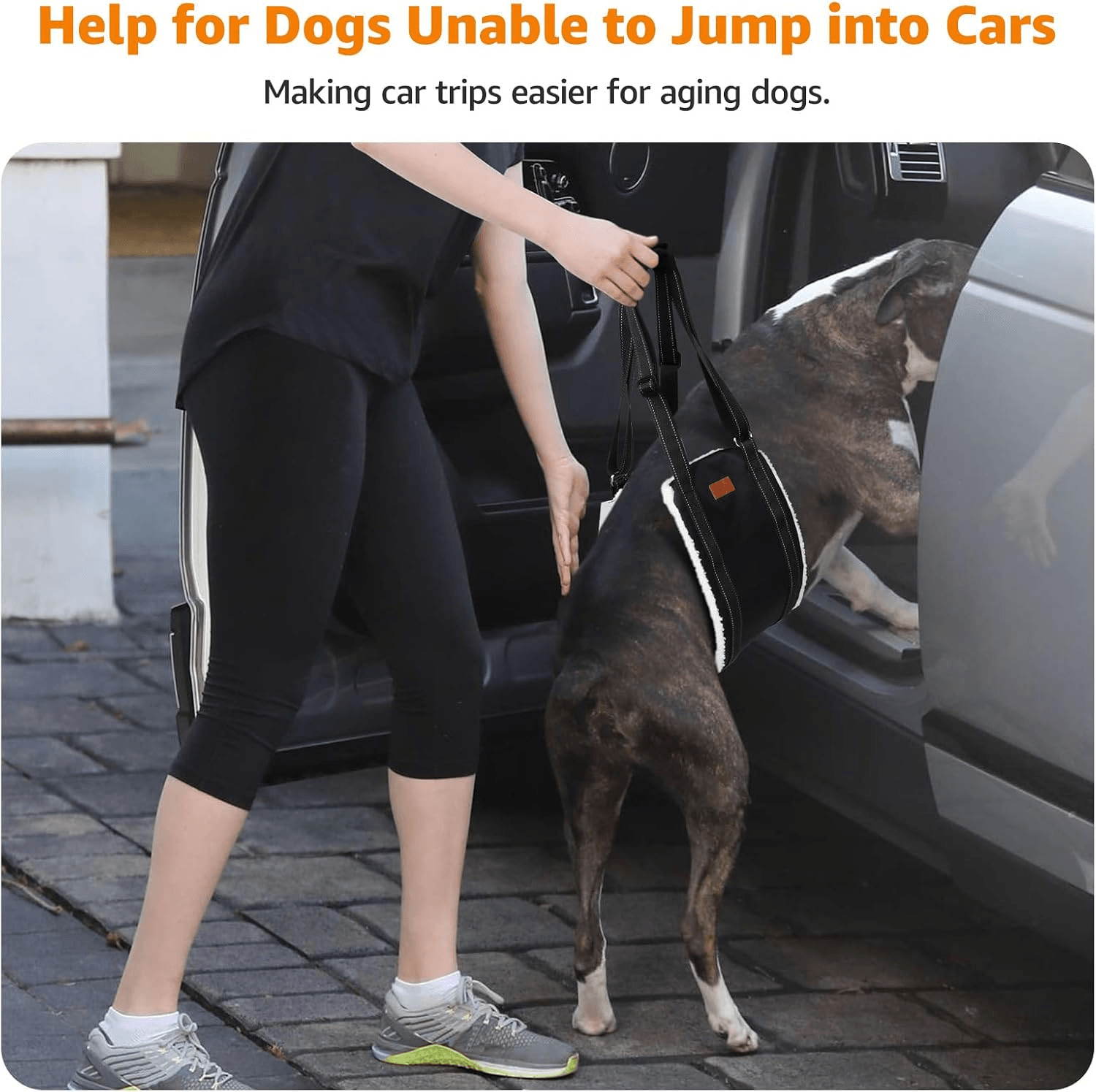
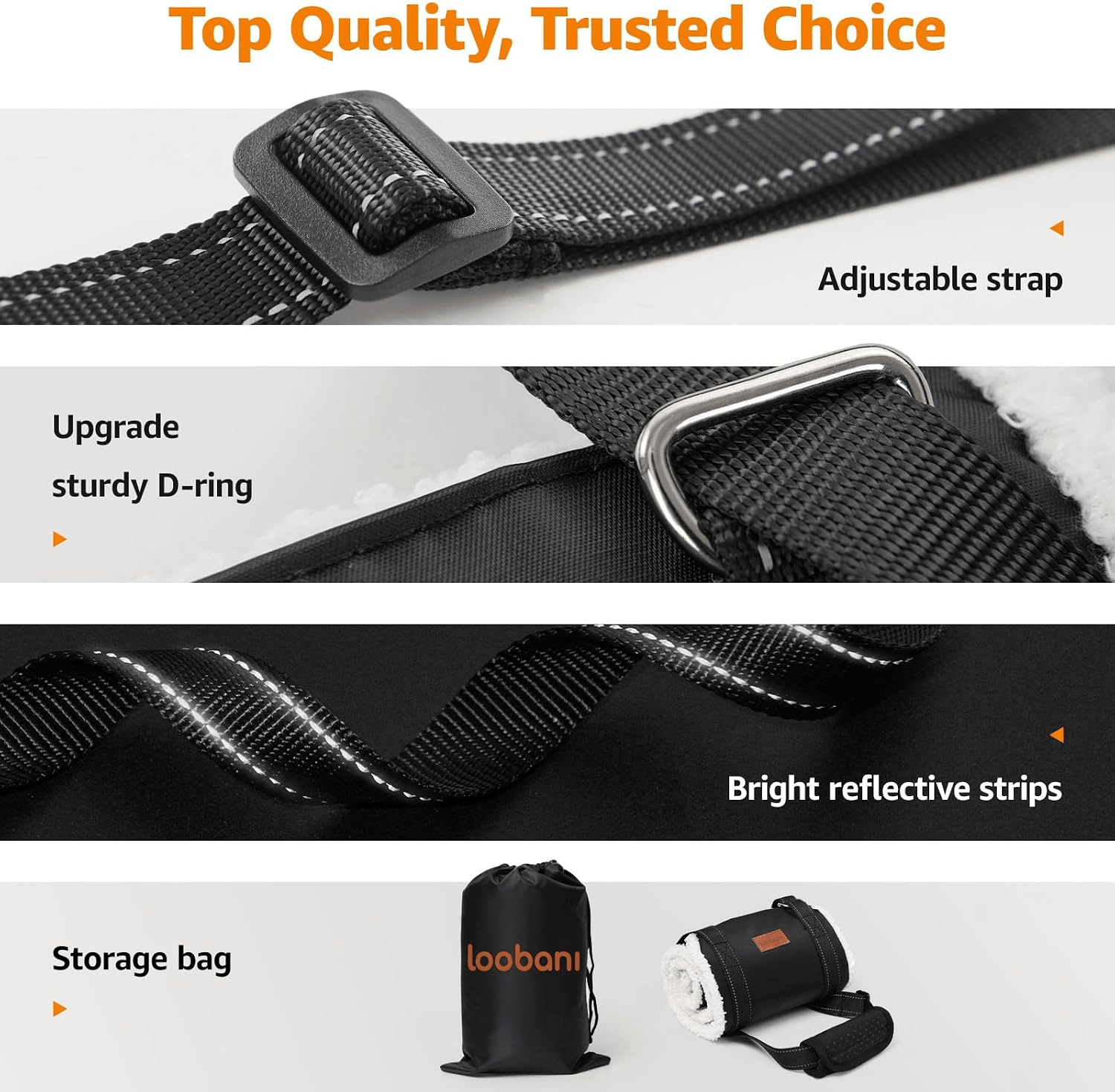
Product photographs and comparison graphics were supplied for this guide and reflect manufacturer or retailer materials. Treat marketing claims as product information, not clinical evidence.
Toileting, hygiene, and skin protection
Take the dog out on a predictable schedule and allow enough supported time to posture. Some dogs need a wider sling placement or a different harness to urinate comfortably. Never squeeze the bladder unless a veterinary professional has diagnosed the need and trained you directly.
- Trim long fur around areas that collect urine or stool, or ask a groomer/veterinary team for a sanitary trim.
- Clean soiled skin promptly with the product and method your veterinarian recommends, then dry completely.
- Inspect hips, hocks, ankles, toes, tail, groin, and sling contact points at least daily.
- Use washable waterproof layers beneath bedding, but keep an absorbent dry layer against the dog.
- Ask about bowel and bladder management before accidents become skin injury or infection.
Plan for progression before the next crisis
Discuss when to introduce a full-body harness, wheelchair, toe protection, grooming changes, and assistance for turning or transfers. A wheelchair can restore exploration for some dogs, but fit, front-limb strength, terrain, supervision, and skin checks determine whether it is appropriate.
Use a written quality-of-life log that tracks comfort, appetite, hydration, sleep, hygiene, social interest, favorite activities, breathing, anxiety, and good days versus hard days. Decide in advance who can help with lifting, which clinic handles after-hours decline, and what signs would mean the current plan is no longer kind or workable.
Signs that should not wait
Contact the veterinary team promptly for new pain, crying, a tense abdomen, inability to urinate, blood in urine, pressure sores, infected skin, sudden worsening, front-leg weakness, choking, coughing while eating, breathing change, repeated falls with injury, or refusal of food and water. Emergency signs include collapse, severe breathing difficulty, uncontrolled pain, repeated vomiting, or inability to stand with distress.
Sources and further reading
We use veterinary, public-health, animal-welfare, and official record sources whenever possible. Sources were checked July 26, 2026.
- Cornell Riney Canine Health Center: Degenerative Myelopathy
- UC Davis Veterinary Neurology: Degenerative Myelopathy
- MSD Veterinary Manual: Degenerative Spinal Cord Diseases
- Veterinary Sciences: Owner experience and management of canine degenerative myelopathy
- Wikimedia Commons: Rear support harness photograph
Quick answers
Is degenerative myelopathy painful?
The spinal-cord degeneration itself is generally described as nonpainful, but dogs can also have arthritis, disc disease, injuries, skin sores, or other painful conditions. New pain should never be dismissed as DM.
Can degenerative myelopathy be cured?
There is currently no cure. Rehabilitation, controlled activity, traction, mobility aids, nursing care, and weight management may help maintain function and comfort, but they do not stop the disease.
How fast does degenerative myelopathy progress?
Progression varies, but it is usually measured in months rather than years once clear hind-limb weakness begins. Your neurologist or rehabilitation veterinarian can help track the individual dog.
When should a dog use a rear support sling?
A sling may help with short bathroom trips, stairs that cannot be avoided, vehicle entry, and controlled walking when the rear legs buckle. A professional should confirm fit and handling technique.
Does a positive genetic test prove my dog has DM?
No. Risk variants can support suspicion but do not by themselves diagnose current disease. DM is a diagnosis of exclusion based on examination and testing for other causes of weakness.