Insulin type, concentration, syringe, dose, meal timing, glucose targets, and monitoring schedule must come from the veterinarian managing the animal. Never substitute U-40 and U-100 syringes, change the dose from one reading, or give another animal's insulin.
Diabetes management is a partnership between the household and the veterinary team. At home you observe appetite, thirst, urine, body weight, energy, injections, and glucose data. The veterinarian interprets those patterns alongside examinations, laboratory results, and the characteristics of the prescribed insulin.
Give the prescribed insulin correctly, keep feeding and timing consistent, monitor the whole animal rather than chasing one number, and know exactly what to do for low blood sugar or a sick day.
Build a repeatable daily routine
| Task | Record | Reason |
|---|---|---|
| Meal | Time, food, amount offered and eaten | Food intake changes how safely insulin can be given. |
| Insulin | Time, exact dose, injection site, initials | A written mark prevents a dangerous double dose. |
| Water and urine | Trend, litter clumps, accidents, urgency | Increased thirst and urination can signal poor control or illness. |
| Behavior | Energy, weakness, wobbling, appetite, vomiting | Clinical signs can matter more than a single glucose result. |
| Weight | Same scale and schedule | Unexpected loss or gain helps identify changing control. |
Use alarms, a paper chart, or a shared phone log so every caregiver can see whether food and insulin were given. Keep the schedule realistic for workdays and weekends. A routine that exists only on ideal Tuesdays is not yet a routine.
Insulin storage and injection essentials
- Confirm the insulin name, concentration, dose, and matching syringe or pen at every refill.
- Store exactly as the manufacturer and veterinarian direct, protected from freezing, heat, and vigorous shaking.
- Inspect the bottle as instructed and note the opening date. Do not use insulin that looks unexpectedly clumped, discolored, frozen, or damaged.
- Measure in good light. If a dose may already have been given, do not repeat it; contact the clinic for advice.
- Rotate injection sites as taught and check for lumps, soreness, wet fur, or a bent needle.
- Place needles and lancets directly into an approved sharps container and follow local disposal rules.
Ask the veterinary team to watch you draw and give a practice dose with the prescribed equipment. Tiny markings are surprisingly capable of becoming a major household disagreement.
Home glucose monitoring: useful data, not solo prescribing
AAHA guidance treats glucose results as one part of monitoring alongside clinical signs. Home curves can reduce stress-related readings and show what the prescribed insulin does during an ordinary day, but the veterinarian should define when to test, which meter to use, what values require a call, and how results affect the plan.
Learn the technique in person
Have a veterinary professional demonstrate the sampling site, warming, lancet depth, sample size, meter use, pressure after sampling, and sharps disposal.
Make the station calm
Keep meter, compatible strips, lancets, gauze, log, treats, and emergency instructions together. Reward the pet for each small step before expecting a full test.
Check every strip detail
Use strips made for that meter, stored closed and dry, within expiration, and at the required temperature. A contaminated or underfilled strip can give misleading data.
Log context with the number
Record time relative to food and insulin, appetite, symptoms, exercise, unusual stress, and whether the sample was difficult. Context turns a number into useful clinical information.
Share, do not freelance
Send the log or app report as arranged. Follow only the dose-adjustment rules the veterinarian has written for this individual pet.
Where a veterinary glucose-monitoring kit fits
A pet-calibrated meter can make home monitoring more consistent with species-specific targets when it is the model the care team understands. The kit does not diagnose diabetes, select insulin, or decide doses. Budget for ongoing compatible strips, lancets, control solution, and veterinary interpretation, not only the starter meter.
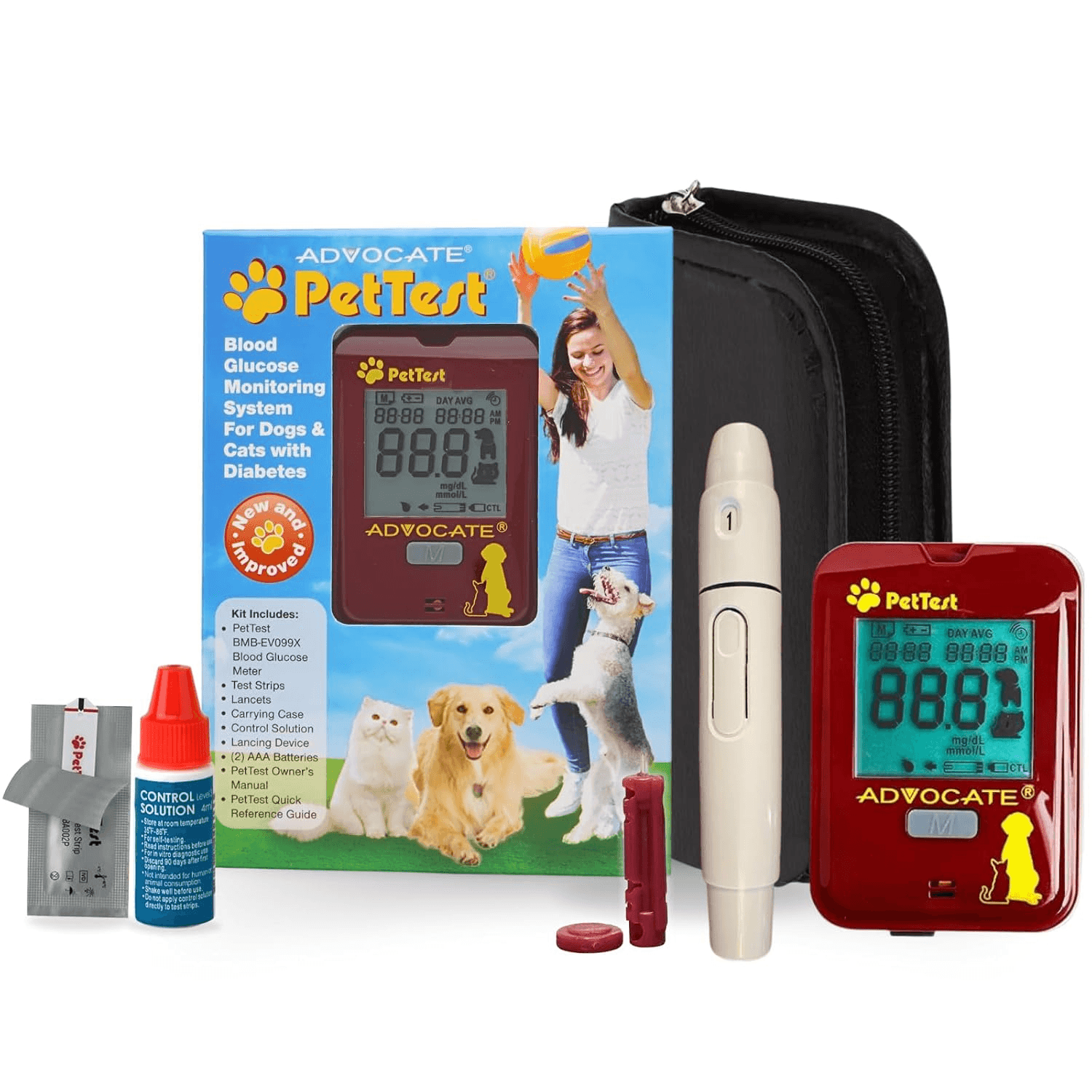
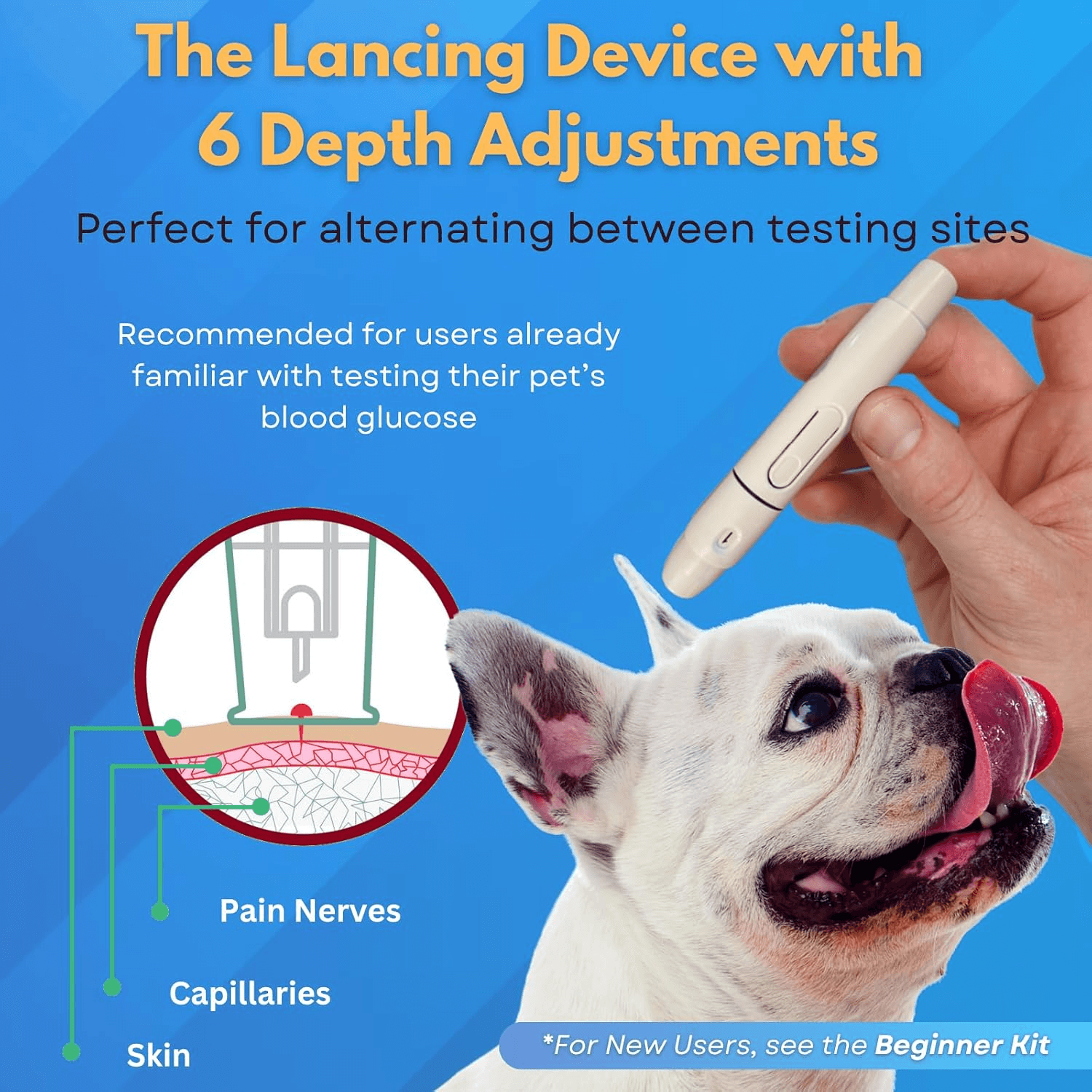
PetTest Expert Blood Glucose Monitoring Kit for Dogs and Cats
A pet-calibrated glucose meter kit with a lancing device and starter testing supplies. It can help owners collect at-home readings and curves for the veterinary team after hands-on training.
Best for: A diagnosed diabetic dog or cat whose veterinarian has recommended this meter and provided testing targets and response instructions.
Watch for: Confirm exact kit version and strip availability, compare the meter with clinic testing as directed, and never change insulin from a reading without the written plan.
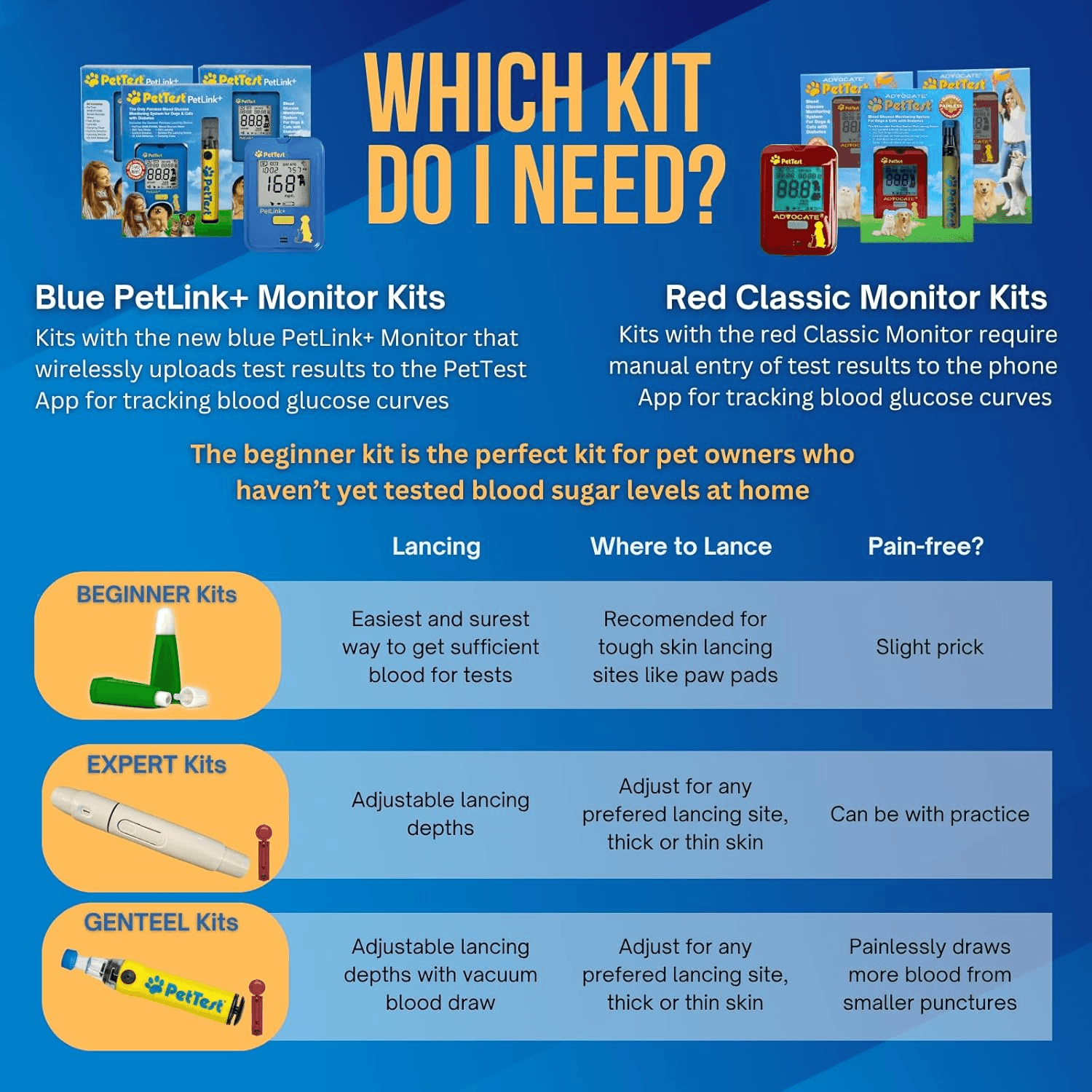

Product photographs and feature graphics were supplied for this guide and reflect manufacturer or retailer materials. Package contents, app support, strip compatibility, and claims can change.
Recognize low blood sugar before it becomes severe
Hypoglycemia can occur if insulin exceeds the body's current need, especially after poor food intake, vomiting, a dosing mistake, unusual exercise, changing remission status in a cat, or another illness. Signs may include hunger, restlessness, weakness, wobbling, trembling, unusual sleepiness, confusion, staring, collapse, or seizures.
If signs occur, follow the veterinarian's emergency instructions and contact a veterinary clinic immediately. If the pet is unconscious or seizing, do not pour liquid or force food into the mouth. Transport for emergency care even if the pet appears to improve.
The veterinarian may instruct your household to keep a specific sugar source available and explain when and how it can be rubbed on the gums of a conscious or unconscious pet without causing choking. Get those instructions before an emergency; this page cannot safely set them for an individual animal.
Create a sick-day and ketone plan
Ask what to do before the next dose when the pet refuses food, vomits, has diarrhea, seems painful, receives a new medication, or has an abnormal reading. Know whether and when the clinic wants urine or blood ketone testing.
Diabetic ketoacidosis is an emergency. Warning signs can include marked lethargy, vomiting, appetite loss, dehydration, rapid or unusual breathing, weakness, and collapse. Do not wait for the next scheduled curve when a diabetic pet is clearly sick.
Rechecks are part of treatment
Bring the meter, log, food details, insulin, syringes or pen, and videos of concerning behavior to appointments. Rechecks may include weight, examination, glucose data, fructosamine, urine testing, blood pressure, and screening for infection or another disease. Cats and dogs can need different nutrition and monitoring strategies, and those plans can change over time.
Sources and further reading
We use veterinary, public-health, animal-welfare, and official record sources whenever possible. Sources were checked July 26, 2026.
Quick answers
Can I change my pet's insulin dose from a home glucose reading?
Not unless the veterinarian has given a specific written protocol for doing so. A single value can be affected by timing, technique, food, stress, meter type, and the insulin curve.
Can I use a human glucose meter for a dog or cat?
Human and veterinary-calibrated meters can read differently because blood-cell glucose distribution differs by species. Use the meter and targets your veterinarian recommends, and do not mix interpretation ranges.
What if my diabetic pet will not eat?
Contact the veterinary team before giving the usual dose unless you already have written instructions for that exact situation. Appetite loss, vomiting, weakness, or ketones can signal an emergency.
Where can I test blood glucose at home?
Common sampling sites vary by species and individual, including ear margins, paw pads, lips, or callused areas. A veterinary professional should demonstrate the site, device depth, sample technique, and safe disposal.
Can diabetic cats go into remission?
Some cats can achieve remission, especially with early effective management, appropriate nutrition, and close monitoring. Remission must be confirmed and managed by a veterinarian; insulin should never be stopped on a guess.