There is no universal safe home dose. A painful dog needs a diagnosis, and aspirin can worsen bleeding, stomach or intestinal injury, dehydration, kidney disease, and interactions with other pain medicines or steroids.
The U.S. Food and Drug Administration says there are no over-the-counter NSAIDs approved for dogs or cats. Aspirin is an NSAID, but familiarity does not make a human cabinet product a routine pet medicine. A veterinarian may use aspirin in selected circumstances; that is different from an owner selecting it because the dog limps on Sunday.
Why aspirin can be dangerous for dogs
Aspirin reduces prostaglandins involved in pain and inflammation, but those same chemical pathways also help protect the stomach lining, support kidney blood flow, and maintain normal platelet function. The result is a narrow line between a desired effect and harm, especially in an older, dehydrated, ill, or already medicated dog.
| Risk | What an owner may notice | Why it matters |
|---|---|---|
| Stomach or intestinal injury | Vomiting, appetite loss, abdominal pain, black/tarry stool, blood | Ulcers and bleeding can become life-threatening. |
| Kidney injury | Vomiting, lethargy, thirst or urine changes, dehydration | Risk rises with dehydration, kidney disease, anesthesia, or interacting drugs. |
| Impaired clotting | Bruising, nosebleed, prolonged bleeding, pale gums | Aspirin irreversibly affects platelets for their lifespan. |
| Overdose | Rapid breathing, fever, weakness, seizures, coma | Prompt poison assessment and treatment are essential. |
| Drug interaction | May begin with vague stomach or behavior changes | Combining anti-inflammatory drugs greatly increases risk. |
Do not improvise aspirin in these situations
Do not give aspirin without direct veterinary instruction when a dog is taking another NSAID, a corticosteroid, anticoagulant, certain diuretics or blood-pressure drugs, or any medication whose interaction has not been checked. Avoid guesswork in puppies, pregnant animals, dehydrated dogs, surgical patients, and dogs with kidney, liver, stomach, intestinal, clotting, or platelet disease.
Never combine aspirin with ibuprofen, naproxen, acetaminophen, carprofen, meloxicam, deracoxib, firocoxib, prednisone, or another pain product unless the prescribing veterinarian has explicitly managed the combination and any washout period. A pet supplement can also contain ingredients that affect bleeding or the stomach, so disclose every chew, powder, oil, and herb.
Human pain products may combine aspirin with caffeine, acetaminophen, decongestants, antacids, or other ingredients. Some flavored or chewable products may contain sweeteners. Bring the entire package when asking for help.
If a dog swallowed aspirin accidentally
- Remove the remaining product and keep the package.
- Call your veterinarian, emergency animal hospital, ASPCA Animal Poison Control, or Pet Poison Helpline immediately.
- Report the product name, milligrams per tablet, possible tablet count, time, dog weight, symptoms, health conditions, and all medications.
- Do not wait for vomiting or black stool; early treatment can matter.
- Do not induce vomiting or give food, milk, charcoal, antacid, or another remedy unless the professional handling the case instructs you.
What the veterinarian needs to decide
Pain is a symptom, not a diagnosis. A limp can come from a torn ligament, fracture, infected joint, spine disease, nail injury, cancer, arthritis, or something caught between the toes. The examination determines whether rest, imaging, surgery, rehabilitation, weight management, a veterinary prescription drug, or another plan is appropriate.
If aspirin is selected, the veterinarian needs the exact product strength, current body weight, diagnosis, expected duration, timing around other medication, monitoring plan, and stop signs. Ask for all of it in writing. Do not reuse an old instruction for a new dog, a new injury, or a later episode.
What a 300 mg dog-aspirin product does and does not mean
A dog-labeled bottle can make dosing look settled before the medical decision has been made. A 300 mg tablet is a fixed amount; dogs, diagnoses, kidneys, stomachs, and medication lists are not fixed. The product below belongs only inside a veterinarian-approved plan for the individual dog.
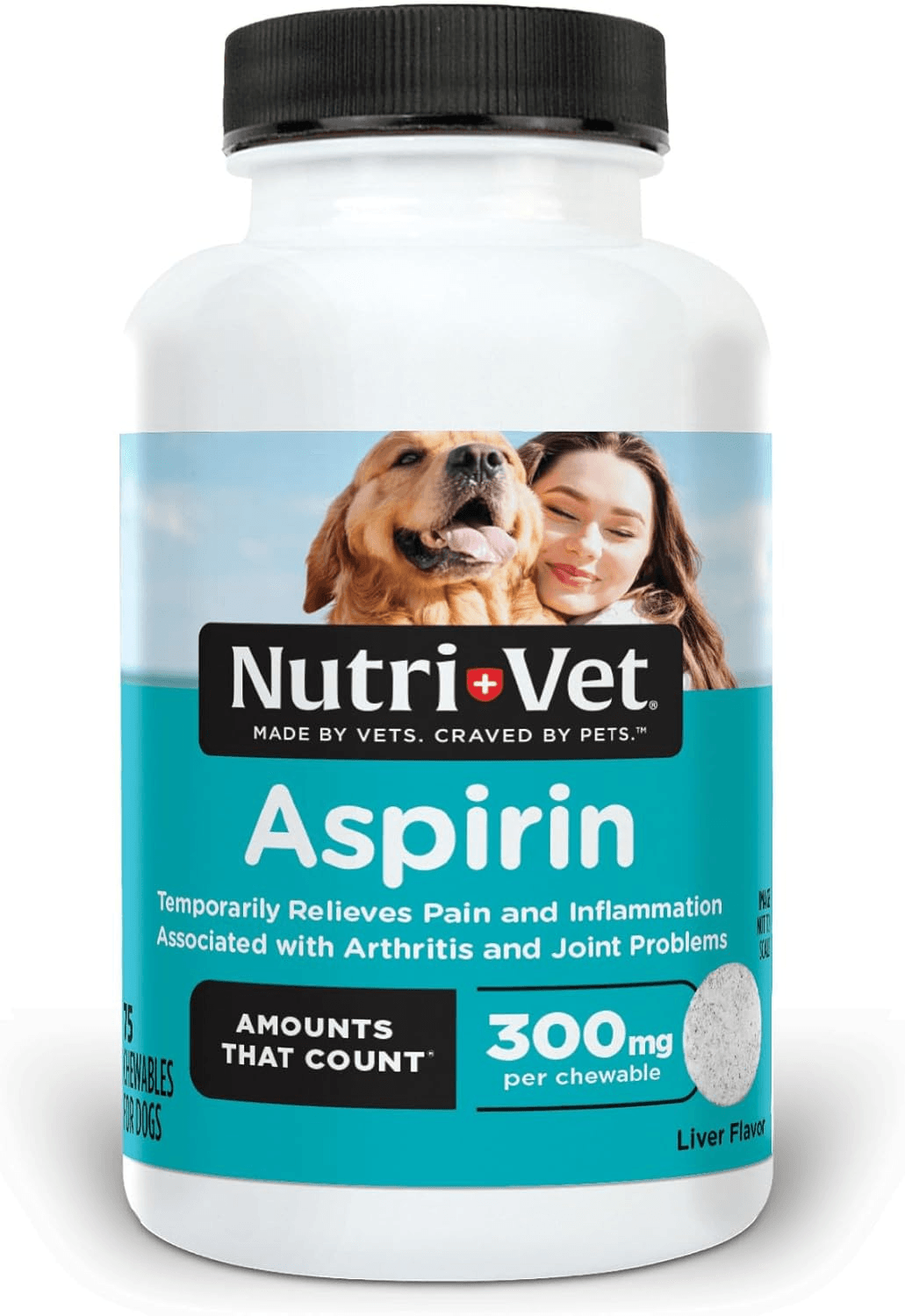
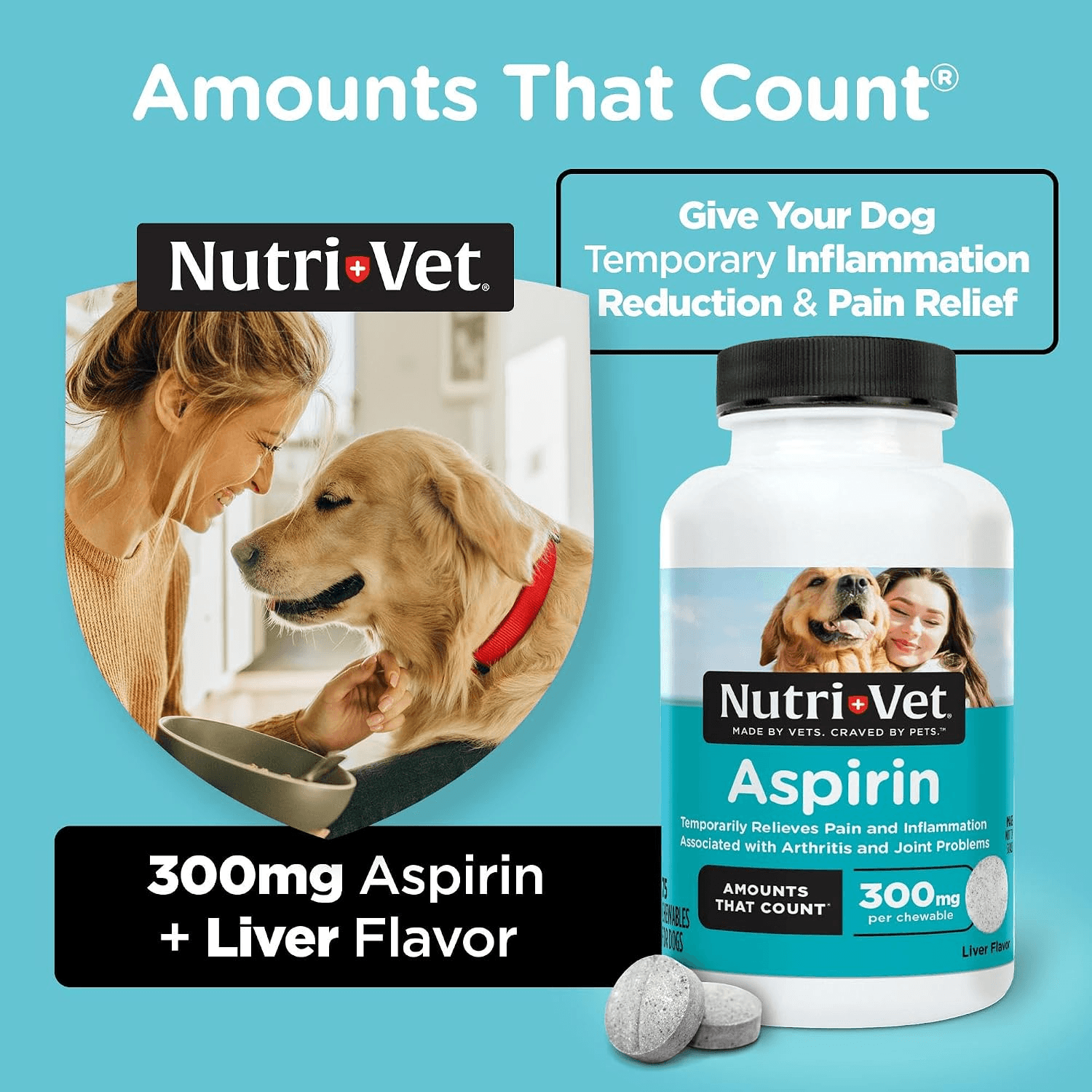
Nutri-Vet Dog Aspirin, 300 mg, 75 Count
A liver-flavored 300 mg aspirin tablet marketed for occasional pain and inflammation in large dogs. The fixed strength makes professional selection and dosing especially important.
Best for: A large dog whose veterinarian has examined the problem and explicitly directed this exact aspirin product, dose, duration, monitoring, and medication separation.
Watch for: Not for self-dosing, cats, small dogs, dehydrated or high-risk dogs, or combination with another NSAID or steroid. Stop and call for vomiting, appetite loss, black stool, blood, weakness, or behavior change.
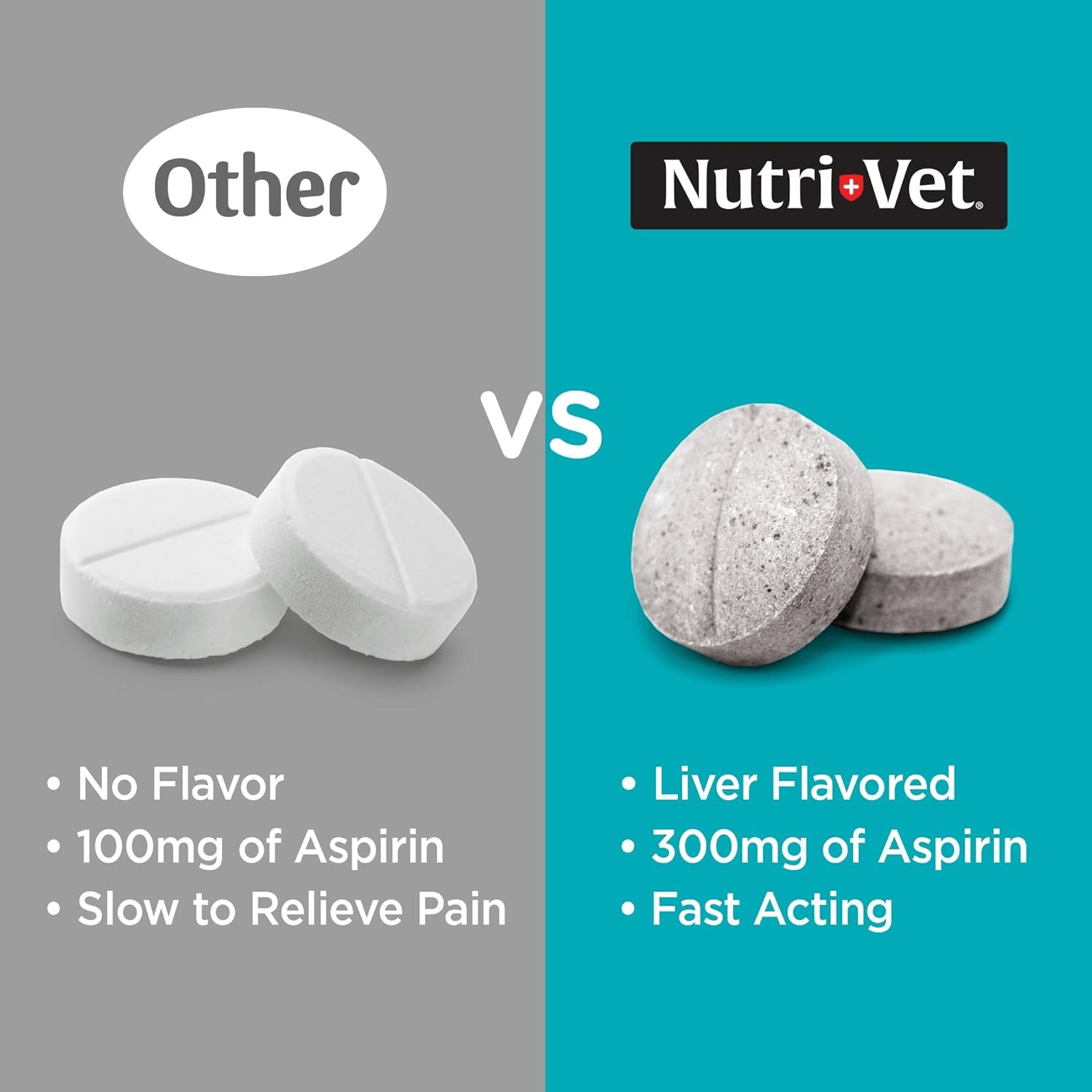
Product photographs and comparison graphics were supplied for this guide and reflect manufacturer or retailer materials. They do not replace the current label or veterinary instructions.
Build a safer pain plan
For osteoarthritis and many other painful conditions, veterinarians have approved prescription options with established labeling, quality control, and monitoring guidance. The right plan may combine medication with weight management, controlled exercise, rehabilitation, traction, ramps, a support harness, cold or heat used as directed, and treatment of the underlying problem.
Until the dog is examined, restrict running and jumping, use a leash for bathroom trips, provide a non-slip resting area, and prevent access to stairs. Do not massage, stretch, splint, or force exercise through significant pain or after trauma.
Sources and further reading
We use veterinary, public-health, animal-welfare, and official record sources whenever possible. Sources were checked July 26, 2026.
Quick answers
How much aspirin can I give my dog?
This guide does not provide a dose because the safe decision depends on diagnosis, weight, age, hydration, organ function, other medications, and the exact aspirin formulation. Call the veterinarian who can assess those factors.
Can I give my dog baby aspirin?
Baby aspirin is still aspirin. The smaller tablet does not remove ulcer, bleeding, kidney, interaction, or overdose risk. Do not give it unless a veterinarian directs the exact product and plan.
Can dogs take buffered or enteric-coated aspirin?
Buffering and coating do not make aspirin universally safe, and delayed or inconsistent absorption can complicate use. A veterinarian should select the drug and formulation.
Can cats take dog aspirin?
Do not give a cat aspirin or a dog-labeled aspirin product unless a veterinarian explicitly prescribes it for that individual cat. Cats clear aspirin very slowly and dosing errors can be severe.
What should I do if my dog ate aspirin?
Call a veterinarian or animal poison-control service immediately with the product, strength, approximate amount, time, dog weight, symptoms, and other medications. Do not induce vomiting unless a professional directs it.